Episode Transcript
[00:00:00] Speaker A: Welcome back to Spill the Tea Unfiltered.
Hey, guys.
Hello. And today we have Kim Dillon with us.
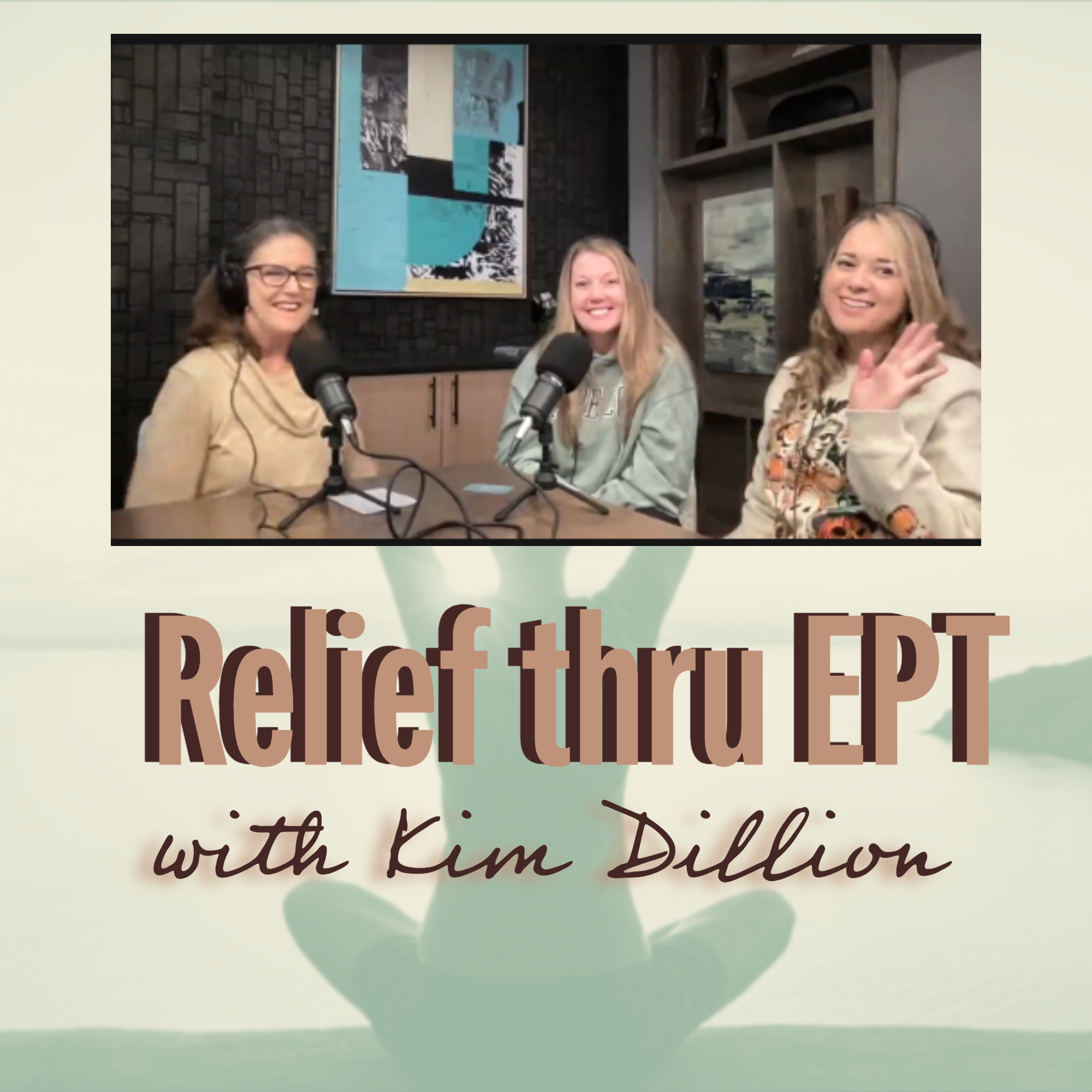
She has a practice called Relief through ept and she is going to explain to us what that means.
[00:00:15] Speaker B: Well, EPT stands for Emotional Polarity Technique. And it's a totally different emotional health care. Rather than relying on traditional talk therapy or drug therapy, it relies on the science of letting go. But I won't sing that song.
But it's been around about 30 years, 33 to be exact. What I do is just help people let go of trauma, of all kind of pain, emotional pain and physical pain. Because the mind, body relationship is so interrelated. And so, you know, it's. That's just what I do. It works. I work with adult and children.
Yeah.
[00:00:58] Speaker A: So whenever a mutual friend of ours connected us, I was like, well, that's really interesting because it's. Because in my mind I'm like, is this a form of meditation?
Is it just like practicing breathing? Like, like, you know, how. How does it work to let go, if you will?
[00:01:20] Speaker B: Well, we have a four part process, process, focus. It all starts with F, but not that the bad F word most of the time. But people feel, feel free when you come, but focus. You get to focus what you want to focus on, which that's different than traditional talk therapy, which I do throw some of that in, but as we need to. But it's really more of a somatic therapy to help your body let go, to help you emotionally let go. And sometimes we think, oh, I've worked on this, but. But we have muscle memory that we're not aware of. Like a lot of people during COVID a lot of you probably read that book, the Body keeps score during COVID And that's exactly what it does. And that's what I do is help. Help the body let go. But I was a client first. Okay. And it helped me get free of 25 years of unexplained depression. And I like that it explained it. And of course I liked that we let it go.
[00:02:23] Speaker A: So do you know, like, is there a way for you to tell us how it explained it?
Like, okay, I know that's hard to like, kind of probably break down because it's a lot of like inner stuff. But can you tell us, like, how.
[00:02:36] Speaker B: Yeah. Okay, well, we'll learn how to muscle test, you know, when you're. So make a chain and then do the other hand in the chain, like that, what I call making a chain. And hold it tight. Right. And then you listeners, you. You do it too. Okay, but do you say your name? My name is Kim. And. Or you know, and it holds strong because that's a true statement.
This is called muscle testing.
[00:03:02] Speaker A: Okay. My name is Lauren.
[00:03:04] Speaker C: My name is Amber.
[00:03:05] Speaker B: Okay, now say something else that's not true. My name is Elvira or something. It'll slip just a little.
[00:03:13] Speaker A: My name is Jill.
[00:03:15] Speaker C: My name is Jessica.
[00:03:16] Speaker B: I saw it. Yeah, yeah. Isn't that wild? Yeah, but that's how I find where you're holding it in the body.
I don't know who to talk to over there.
[00:03:27] Speaker A: Both of us, all the people that
[00:03:29] Speaker B: are here but you. I use the muscle testing to find where in the body you're holding the emotion, if it's even your emotion. Because a girlfriend may be going through a really bad breakup and you feel all those emotions with her. Right? Because. Yeah. So you can be carrying stress in your body that's not even yours, you know, and that was my case. I was carrying, you know, someone's shame. They didn't know how to work through it. And I love them. And I was, I carried it too, out of love, you know, without my subconscious did. But you know, how. So our subconscious doesn't always agree with our conscious mind. And this is what I do is help them agree together. Because like when we're on a diet, we have this goal, conscious mind.
And. But our inner child says, I want a Snickers bar, you know, and it doesn't agree with the conscious mind. So. So it kind of wrecks our diet plans. So when I can get them to agree, then they can work together and be happy together.
But. But it's just muscle testing. And I also use really strong magnets. I.
I'd get into holistic things, but you think about your whole nervous system is electromagnetic. And like when people go when they're surprised, your hand is like a north side magnet, which is calming, calms the system. And they're calming and they're doing a holistic thing by calming themselves like this. Or if they have a headache, you know, it hurts so they, they put it on there. And I keep a pair of magnets at home because I'll get a headache at home and I'll. I'll put it on or whatever. And a friend of mine, she. She forgotten what she had to hold her hair holding her magnets like this where her headache was, and she forgot and went and got the mail and her neighbor was like, what is that? But it's just science. It's all of this. It sounds woo woo. It sounds crazy, but it is just science. It's science based, evidence based.
And so, so we find where in the body through the muscle testing. We are holding the old emotion because here. But I can feel it.
[00:05:42] Speaker A: I'm always like this.
[00:05:43] Speaker B: Yes, yes. A lot of people carry their attention right there. Yeah, that's, that's shouldering responsibility. There's responsibility that you're shouldering that we can, you know, that feels heavy to you. So I can help.
My friend said I need to do a marketing on and do little stickers like one facing this way. I can help with that. And then face it the other way. I can help with that.
Because I'm always saying that.
[00:06:07] Speaker C: Yeah.
[00:06:08] Speaker B: But I just, it's. It's real. It's amazing because ptsd, it can help with which really, that's what trauma is. It's. It's the physical reaction to. But that's what, what we help with. So we, There's a four part process when you come to a session, focus, find it. And I find it with the muscle testing. Fix it. We fix it with the magnets and then forgive it because forgiving is a releasing term. And so we let it go. And then I stuff as much good in there as I can. And. And so one of my little things I like to say is helping people live their highest and best lives. Because we get one shot at this. People, you know, we want to live our highest and best lives.
And I like what y' all are doing. Helping people negotiate with the, with the crazy relationships, which I also help with. But it's, it's, you know, boundaries are a beautiful thing, but not everybody, you know, will respond to the boundaries. Like.
[00:07:09] Speaker C: Yeah, well, you have to learn boundaries too. So like, that's a big part is understanding that it's okay to have boundaries and learn how to use those boundaries
[00:07:19] Speaker A: and that if people don't like them or don't agree with them.
[00:07:23] Speaker B: Right. That, Right.
[00:07:24] Speaker A: It's. It's okay. Like, just because they are pissed off at you, that's a them problem, not a you problem. And that's something that's hard to learn.
[00:07:32] Speaker B: Yes.
[00:07:33] Speaker A: And, and because we are taught, especially as women, we are taught from a very young age to be submissive to don't, you know, muddy the waters. Don't.
[00:07:43] Speaker B: Right.
[00:07:44] Speaker A: Don't do any of that. So when a woman stands up, then they're almost like shamed because like, how dare you go against society. And so.
[00:07:54] Speaker B: Yeah, but you know what? When she does that, like society teaches us she's not showing up for herself.
We forgot someone important. And that's what I've noticed is, is when people are.
The good part about getting older is 11 years of practice that I've had doing this.
So.
But I've noticed, like, people that are in their 20s, early 30s, they give their all to their relationship. They're like, laying it down there, doing all they, you know. But then, you know, about 40 or so or a little bit earlier, they need to. They're realizing, oh, I forgot somebody. And that was, you know, what we just said. Forgot to show up for myself. And so I told my husband, We've been married 42 years.
[00:08:38] Speaker A: Congratulations. It's rare.
[00:08:40] Speaker B: Yeah. Back then. People got married earlier back then. But I said, you've been married to many people, many ladies, and they all been me.
[00:08:51] Speaker A: Well, but I think that's important because in a good relationship, in a good marriage, that is part of it. You do change. I'm not the same person I was even two years ago when I was in my relationship with Dick. I'm a completely different person now. And I think that that's.
[00:09:06] Speaker B: Hope. He didn't act like his name.
[00:09:08] Speaker A: Oh, no, he did.
[00:09:08] Speaker C: Oh, he did.
That's why that's his name.
[00:09:11] Speaker B: Oh, that's the one. Oh, my gosh.
[00:09:13] Speaker A: That's the.
[00:09:14] Speaker B: You get to meet each other.
[00:09:15] Speaker A: That's right. Well, that's like, the good thing that we got our best friend out of it, your marriage. But I think, like, Even in my 20s, like, I wasn't the same person once I hit my 30s. Like, there's so much with, like, career growth and just trauma and things that happen that you change. And in a good relationship, your partner supports it and stays with you, and you grow together and you change together. The problem today is a lot of people don't want to do that. They're like, oh, I didn't sign up for this. And then they bounce. And it's just, you know, and if. And if there is change that's negative, then definitely bounce. Like, do not stay with somebody who's abusive. Please. We do not want you staying with abusive.
[00:09:54] Speaker C: Please don't.
[00:09:55] Speaker A: But, you know, it's one of those things where I feel like. Like, in Dick's. In Dick's world, I changed because I said, hey, we've got to tackle this debt. Now that you have a good job.
I've been paying for four years for you, we need to start tackling this debt. He did not like it. And that's. I mean, he was already having affairs, but that's when he was really looking for his next me. Like, he was like, I'm gonna find my next wife, which was Amber.
He thought.
[00:10:23] Speaker C: He thought.
[00:10:24] Speaker A: He thought, he thought Amber. Because Amber was successful. Amber and I have.
We're basically the same person.
So it's really kind of weird. It is.
[00:10:33] Speaker B: You look alike a little.
[00:10:34] Speaker A: I know.
[00:10:35] Speaker C: I, like, literally, I was like. When I first met her, I was like, was he just going for, like, the $tre free version?
[00:10:39] Speaker A: Like, what is going on?
So stupid. Because she's successful. She loves Halloween, she loves to travel. Like, we. I even, like, when I was stalking her, trying to meet her and find her, I was like, I want to be friends with this person. Like, I was like, she was doing shit that I love. Like, she was on a cruise. And I was like, I want to
[00:10:56] Speaker B: be on a cruise.
[00:10:59] Speaker A: But in his mind, he was like, I don't want to pay bills, so I'm going to find another woman who won't make. He thought wouldn't make him pay bills. The only thing is that she'd been through her own trauma and he didn't realize that. So she was like. She saw it. She saw the red flags, and she said, gots to go. And she kicked him to the curb pretty quickly.
[00:11:16] Speaker C: Yeah.
[00:11:17] Speaker B: Let's see. I got on here. Red flag. Yeah. Yeah. Pay attention to the red flags. Because so many times we, like, skim over.
[00:11:24] Speaker A: We make excuses for them.
[00:11:26] Speaker B: Yeah.
[00:11:26] Speaker A: And I 100% did. Like, looking back at our. Even our first meeting in our first date, it was three hours, he had some red flags, but there were definitely red flags in there that he said that I don't think I even realized were red flags because I had never dated someone with children.
[00:11:39] Speaker B: Right.
[00:11:39] Speaker A: I don't want my own children.
And so when he said things like, I don't really have my kids that often, and, you know, we. And if I don't want them, I don't have to get them. I didn't see that as a red flag at the time.
[00:11:53] Speaker B: Yeah, that's on here, too. Yeah.
[00:11:54] Speaker A: And then once I learned. Once I met his kids and especially his daughter. I have a very close relationship with her and so.
[00:12:02] Speaker B: Good.
[00:12:03] Speaker A: You know, when I felt in love with his daughter, I got pissed that he was neglecting.
[00:12:07] Speaker B: Right.
[00:12:08] Speaker A: His kids and stuff. And especially, like, now, like, I'm not even in the picture now. And he still.
He hasn't seen his daughter in a year.
[00:12:16] Speaker B: Oh, wow.
[00:12:16] Speaker A: And I'm like. Because he's running around in another state.
[00:12:19] Speaker B: That says volumes.
[00:12:21] Speaker A: It does.
[00:12:21] Speaker B: So.
[00:12:22] Speaker A: It does. And he's neglected the other he, his son who used to come to my house all the time. He doesn't, he hasn't talked to him and doesn't talk to him and doesn't claim him. When he tells other women that he's dating, he tells them he only has one kid and it's his daughter. He doesn't even claim the son. I knew. I found out there were two other kids.
[00:12:37] Speaker B: Oh, wow.
[00:12:38] Speaker A: So there were four kids, but two he also didn't claim. So he didn't even tell me about them.
And he had drove a wedge between me and his father and stepmother and told me thing lies about them so I wouldn't want to be around them because he did. He. They were going to tell me about the other kids.
[00:12:57] Speaker B: Oh, wow.
[00:12:58] Speaker A: And he didn't, like, he didn't want that. Right. So definitely red flags that I didn't see or chose to be blind to or just I was so in love or infatuated with somebody who was. I at the time was a thicker girl. And I think that I was like, oh, he loves me for me and this is great.
[00:13:18] Speaker B: And he was doing the love bombing thing he did.
[00:13:21] Speaker A: He love bombed the living God out of me, and I fell for it. And so that's one of the reasons we created this podcast, is because she's been love bombed, I've been love bombed. And we want to spread the awareness, especially for girls that are younger. But I, I wasn't even younger. Right. I was 33 when I met him. I think 33, 34. And so, you know, I looks for the vulnerability.
[00:13:40] Speaker B: He looks for the giver. The really big giver. Yeah, we're talking about narcissist, and I just read a book, the Difference between Borderline Personality and Narcissism. You know, but that's a red flag that I like to, when you're dating is see what they can do with, you know, what do they do with someone that can't do anything for them, like little children or like the elderly or the homeless or what do they do when their computer blows up? What do they do? You know, it's. I heard a saying going into a serious relationship to keep both eyes wide open and then half shut later after marriage or whatever, you know.
[00:14:22] Speaker A: So, yeah, I just think it's, it's, it's a harder world today too, with dating.
[00:14:28] Speaker C: I think that the culture's really changed the mindset of dating now, and it's not taken as seriously. We have really degraded dating for so long, and the music we listen to. They degrade women all the time.
And I think that that's really changed the way that dating is.
[00:14:48] Speaker A: Yeah.
[00:14:49] Speaker C: Our culture.
[00:14:50] Speaker A: Yeah. And it's just for that anymore social media and everything else, like people have access and so there's always the, well, is there something greener on the other side? Thought. And so no one's just content with their lives. They're always trying to chase something bigger and better in their minds. And so I think that that's been an interesting thing and that's why both of us. So we're single by choice. Neither one of us are dating. We don't want to date. We're good. And I think that a lot of women like are. Huh?
Oh yeah. A lot of women today are, are getting like that. Right.
So we all have trauma and we're holding our trauma, but we also one as women, we're like, I'm not going to put my trauma on somebody else too. I don't want to take on anyone else's trauma. Because a lot of men, especially, like I would venture that. Are most your clients female.
[00:15:40] Speaker B: Yes.
[00:15:41] Speaker A: Yeah. Shock.
[00:15:41] Speaker C: Yeah.
[00:15:42] Speaker A: Because. And that's the difference. Right. Like a lot of times females, we want to be better. Right. We're constantly growing. Let me learn something. Like I'm learning coding right now. I thought a day in my world that I would learn coding, but here I am. But I just feel like we have this innate, like, I want to grow, I want to do stuff and I just. And if I'm hurting, I want to fix it.
Let me go to therapy. Let me find, you know, some holistic way to fix myself because I want to be at peace. And men tend to not.
[00:16:10] Speaker B: You know what the saying about therapy is, right? What? That therapy is for those dealing with people that won't go to therapy.
[00:16:18] Speaker A: I mean, I mean, it is. I'm going to tell. And I think that like really, like
[00:16:22] Speaker C: again, like speaking on our culture is that our culture, men are taught to act like they're strong and that therapy's weak. So they don't want to do therapy.
[00:16:32] Speaker B: Right.
[00:16:32] Speaker C: They don't want to work on themselves. But that's the whole issue is that they need to work on themselves. If they're carrying trauma, they need to work on themselves too.
[00:16:40] Speaker B: Yeah, Yeah. I think a lot of people traumatizing
[00:16:43] Speaker C: somebody else with their trauma. Yeah.
[00:16:45] Speaker B: Right. I think when you get to be middle aged, that's why the body starts breaking down because we stuffed so much emotions in there that we haven't, you know, that it's because it starts toward disease when, where. When an organ gets out of balance and I have a body scan to go through and just with the muscle testing and the magnets to see what's out of balance. Because it does start toward disease, whether it's over performing or we've all had that bladder that's over performing, you know, or underperforming, like thyroid, you know, so.
Yeah, but that's what, what we can help let go of of trauma. We can help let go of. Of patterns. Like, we have probably some friends that they break up with this guy and then they get someone that treats them just the same, you know, and that's like a pattern. But we can work on that pattern, let it go. And not to judge ourselves, because sometimes it's.
It's inherited. You know how they, they ask, the doctors ask about who. Who's had a heart attack in your family, blah, blah, like that. But emotions are inherited too. They did.
[00:18:01] Speaker A: Thanks, Mom.
[00:18:03] Speaker B: Yeah, yeah.
[00:18:03] Speaker C: Because they talk about, like, generational depression and stuff.
[00:18:06] Speaker B: Yeah. That kind of thing.
[00:18:07] Speaker C: That's like something I've recently heard over the last couple years is. Yeah. A lot of talk about generational depression.
[00:18:13] Speaker B: Yeah. They did a study of survivors of a famine in Finland and their kids had the same spindly leg parents did. And then another control group was survivors of the Holocaust. Their. Their kids had the same, you know, signs of starvation like their parents did. And, and they couldn't figure it out. But then they looked on the DNA of the parents and the trauma changed a chromosome in their DNA.
[00:18:40] Speaker A: Wow.
[00:18:41] Speaker B: And it was passed down in that changed form to the children.
But the good news is that we can, like, like my friend said, we can work on that.
[00:18:51] Speaker A: Yeah.
[00:18:52] Speaker B: Yeah, we can help that.
[00:18:53] Speaker A: I have a, I was looking at the camera because I have a friend, a very close friend who tends to date the same type people, and I'm like, bruh. Like, well, yes, come see us. Yeah. I'm like, she doesn't live here, but if you want to come to town, I got you, girl.
[00:19:07] Speaker B: Oh, I do virtual work.
[00:19:09] Speaker C: There you go. Over to you after this podcast.
[00:19:11] Speaker B: Yeah.
[00:19:12] Speaker A: Literally. Literally.
[00:19:13] Speaker B: Well, we all need a little help from our friends.
[00:19:16] Speaker A: Yeah.
[00:19:16] Speaker B: You know, we, like the Beatles said, and that's what it's good just to get another viewpoint and work on.
[00:19:23] Speaker A: Well, but, and, but then like you said, like when you were talking earlier about when you love somebody and you're carrying their trauma.
That's been me with her, particularly for years. She would call me and if she, if she calls, I know There's a problem because she never calls. She's a texter, so when she calls, I step out of whatever I'm doing. And she went through a lot of stuff in her 20s with, like, cutting and. And all that stuff. So then I'm constantly. You know, when I lived with her, there was a point where I had to hide all the sharp things. And then later I didn't live there anymore, so I felt like, you know, what's going on and stuff. And then, like, now she'll call and, you know, she's grown. She has gone to therapy and stuff. But she, like, that's the issue is, sadly, she's. She for a long time picked the same type of people.
Then she found one that seemingly was good, Right? So everyone loved him. Like, we all thought he was good.
[00:20:19] Speaker B: Oh.
[00:20:20] Speaker A: And he ended up being a complete nightmare and, like, completely lied about everything. So, like, he told us that he wanted to marry her. He was older than her. She wants children.
We were like, okay, this is it. And she was on something from the beginning, right? Like, you know, I want kids. I'm getting older.
I'm in my late 30s now, so we need to do this soon. Two years into the relationship, they were literally looking at rings the weekend before. And then he text her and broke up with her a week later.
[00:20:48] Speaker B: Week later. Oh, my gosh.
[00:20:50] Speaker A: And so we were all shocked because we were like, what the fuck? So now she's fucked now because in her mind, she's like, okay, I had a good one. I had one that I hardly fought with. I had one that seemingly was supportive, that seemingly was a good guy. And then he did the same shit, which is almost worse, right? Because it fooled her for two years and fooled her family, fooled her friends.
And it was almost worse than, like, all the others she dated. I hated. And I was open about it. Like, I. If anything, we know. Lauren will tell you if I don't like somebody. So, like, from the beginning, I was like, I hate him.
[00:21:19] Speaker B: That's a good friend that. I'll tell you straight.
[00:21:21] Speaker A: Yeah. And. But this. This one fooled me, too.
[00:21:24] Speaker B: Yeah.
[00:21:24] Speaker A: And so then I also had the guilt from that because I feel like, did I miss something that I could have told her, like, ahead of time,
[00:21:30] Speaker B: you know, who he had to, you know.
[00:21:33] Speaker A: Yes.
[00:21:33] Speaker B: To fool.
[00:21:35] Speaker A: But then. So now she's in this world where she's like, I can't trust anybody.
And so then she's dealing with that trauma, and she doesn't.
Our other really close friends have children. So she's like, Let me. You know, she. And she's Me and her, like sisters, so she's like, I'm gonna call you. And so, like, I know that, like, I do bear a lot for my friends, and. But I want to.
But then it's like, okay, now I need to also take care of me, which I go to therapy every week, so that helps a lot. But I can feel I hold a lot here.
[00:22:05] Speaker B: People could do talk therapy and EPT together a lot, you know, But EPT gets to the root of. Of what? Like the root memory of it. Like, one time I had an Alzheimer's. He had just been diagnosed with Alzheimer's, and it went back to age 7, when he was trying to forget this big thing where he tried to please his dad and play baseball when he was a book guy, you know, at age 7, and he just wanted to forget it. Well, his. His mind took it to mean you want to forget across the whole board, you know, and so that helped the Alzheimer's, but I was able to. To help him recover some of his memory. I just wished that the Alzheimer's didn't have him stop coming to me. You know what I mean? But it can. EPT can. Is a collaborative therapy. It takes. Takes the client to. To want to work on it too, you know, like you say. But.
But yeah, it gets to the root of it is what I was getting to. Like, his went to age 7. And so when it goes through the root of it, then we can start to help there be hope, help there be a different pattern and to go from there. And I have helped people with relationships, you know, where they had. You know, I've had people where they had two.
Two bad relationships, one gentleman. And then he. He found someone during COVID of all things, and. And is happily married now. But it's all about changing the patterns. And a lot of times we'll even. We may have found our person, but the old patterns may hold us back because our subconscious said, okay, you know, we found our significant other. But our subconscious thinks the significant other acts like crap, like. Like what we've known before, you know, we have to retrain it, you know, But I said a lot.
[00:24:00] Speaker A: And I don't want people to think that they need to do something like this to find a relationship, because that is not what we're saying you don't need. I think one of the things we need to realize in today's time is like society says, you have to be in a relationship and be with somebody. And that's not true. You can Find just as much fulfillment and joy from your friends, from your family, from your hobbies, from your career. Like, you don't have to have kids, you don't have to have a relationship. Which are the two things that society tells women they have to do. But women, because we're constantly told that something like this could be beneficial of letting that societal expectation go.
[00:24:34] Speaker B: Yes.
[00:24:35] Speaker A: Which I think is big because that's one of the things reasons I wanted to bring you on was to be like, I had never heard of something like this.
And I think that women, we carry more societal expectations that hold us back from experiencing our full selves and our full lives.
So this could be something that could be like. Because women a lot of times have guilt, like, if we don't give our parents grandkids, if we don't get married, we're a failure. Or we feel like we're behind in life. I had a friend earlier this week, you know, say that she said, sometimes I feel like I'm behind in life because I haven't gotten married. And even I haven't even gotten divorced. You know, like, haven't gotten married, haven't got divorced, I haven't had kids.
And she doesn't even necessarily even want those things, but society makes her feel like she's behind.
[00:25:19] Speaker B: Right.
[00:25:19] Speaker A: So I think something like this could be a beneficial thing to those.
[00:25:23] Speaker B: And we do the release statements at the end. The. That's what some of the release statements are, is about. I.
I forgive society for teaching me this. You know, or one time I had a friend, a client, that she has a really good sense of humor. But we. So the humor will show up in the statements. But I felt led to tell her, I forgive Disney. Sometimes we gotta forgive Disney for teaching us things when we're little. You know, about 100 prince will come and save the day. And no, it's not Disney toxic.
[00:25:58] Speaker A: Like Disney be toxic. And that's the. Yes. And that's what's sad, is because so much of our childhood was wrapped in Disney. Because in the early 90s, that's when all the movies got pushed and everything. So our childhood is literally wrapped around Disney princesses. Like, we all picked a princess.
Like I was Ariel. And now looking back, I'm like, I would eat Eric.
I wouldn't. I wouldn't walk on land for him. I would drag him under the water and drown him. Like.
[00:26:23] Speaker B: Yes.
[00:26:23] Speaker A: So I think you wouldn't be combing
[00:26:25] Speaker B: with a fork your hair.
[00:26:26] Speaker A: Yeah, yeah. The fork would be in your jugular. Sorry, I. But I Do think that's true? Like, that's another. Like, it's funny, but it's also true. Like, it's funny and it's not funny because it's like, sadly, a true situation that we have dealt with.
[00:26:40] Speaker B: Yeah, that's some of the things that we have to let go of to. Yeah. Guilt is such a weird animal anyway, because it's usually a placeholder.
So I'm going to put this, you know, subconscious says, I'm going to put this guilt here because I really. I know you asked me to go do this and I said I would, but I.
I just can't make myself after the day that I've had at work or something. And so I'm going to hold this guilt because I want you to know that you mean a lot to me. You know what I mean? But we have to let that go because it's not. Not helping us, you know, it's just how that day turned out. Sometimes we. We just can't keep our word. Like. Like we want to, even when we're really trying to be good at doing that, you know, But. Yeah, but we got to show it for. For ourselves sometimes and build little spaces in our lives, like between clients. I try to. To build a little space because that. That little girl in there, she needs something, you know, she needs a little fun. We all have that where we need to help her out a little bit sometimes, too.
[00:27:48] Speaker A: Yeah. That's one of the reasons, I think I like to dress up. And, like, do. I do. We both do photo shoots and get to dress up and have fun. And we had a really fun one on Sunday. And I think that that was like. I brought. It brought me a lot of joy. I know it brought you joy, too, because we were just having a good old time.
[00:28:04] Speaker C: I murdered Lauren.
[00:28:05] Speaker A: She did.
[00:28:07] Speaker B: I'll just say. Was it a Halloween one?
[00:28:09] Speaker A: Yeah, it was. It was so fun. And we did like a Kill Earl shoot. So we were both like, with a dead fake body and stuff. Or was it.
[00:28:15] Speaker C: We killed our ex?
[00:28:16] Speaker A: Yeah, but it was, you know, I think. But that's. That to me is. Part of the point is there are ways to find the healthy, fun outlets that you can still find joy in. Things like dress up. It doesn't mean that I'm not a feminist because I like to play dress up. Sometimes I use that in my feminine rage, if you will. Like, I'm like, let me dress up and get bloody. People just need to find their niche and find what. What can help them. And I think that maybe Doing some breathing techniques and like learning how to sit and think, because that's a lot of it. Right. People don't want to sit with their emotions.
[00:28:54] Speaker B: Right.
[00:28:54] Speaker A: And something like this kind of makes you.
[00:28:56] Speaker B: They'd have to feel it. Yeah, yeah, they'd have to. That's the only way that it can change is to let yourself have a moment. And the breathing is for real. We incorporate that in ept, but it's, it's for real because that's the only way that we can help. Our parasympathetic system that runs everything while we're asleep, runs our heart, runs our lungs, runs everything.
And it's carrying all this stress, but that's how we can help it, is to do that deep breathing, you know, four seconds in and four or six seconds out. If, if the exhale is longer, then it help teaches your body that it's safe, you know, and because a lot of times this, this traumas, these relationships we've been through, our body learned it wasn't safe at the time and it can get stuck there, but we can, we can help it that way.
[00:29:49] Speaker A: Yeah. And so you said you do online stuff as well, but you also do stuff in person, here, locally. Right. So do you do like, is it always one on one? Is there like classes? What are the, what do you offer?
[00:30:02] Speaker B: Right now it's one on one, but if a couple, if a couple needs help, they'll, I'll have them both come in together, the first one, and then we'll work on each person's individual thing and so, you know, start working on it that way.
So I have done a group class. I want to get to that in the future, you know, because we could work on something together and we all rise above it together, you know, so that's the kind of thing that I want to work on.
[00:30:33] Speaker A: I, I, that's what I was wondering is like, do you do something like our friend Tanya, who has Southern home and kitchen shop, like doing something at her place where like a group of women could come in and we could like bring our yoga mats and like practice breathing and all that stuff together.
[00:30:48] Speaker B: Yeah. Do some statements and breathe afterwards and. Yeah. And maybe some yoga with it. So. Yeah, because that's, that's so good. So good for us.
[00:30:58] Speaker A: Yeah, I think that'd be great. So if people want to get in touch with you, how do they find you?
[00:31:03] Speaker B: I have a teeny website that I'm starting to work on, relief3pt.com and then you can always call me 256-759-0496 or my email is relief through Eptmail.
[00:31:20] Speaker A: Okay, so perfect. We'll put all her contact information below this if this is something that you feel like you would like to do. Because she does do virtual, so it doesn't have to just be local people to the Huntsville, Alabama, area. So if this is something that interests you, then we will put all her contact information in there. But I do think this sounds great. I feel like I need magnets on my shoulders. Like, just weighed down.
[00:31:45] Speaker B: Yes.
[00:31:46] Speaker A: But, yeah. So thank you so much, Kim, for coming on. We really do appreciate it, both of y'.
[00:31:50] Speaker B: All.
[00:31:50] Speaker A: Yeah, it was a great one. So we will see you guys next week.
[00:31:54] Speaker B: Okay. Bye.
[00:31:54] Speaker A: Bye, guys. This episode is proudly brought to you by the law firm Ryan and Rouse. If you or a loved one have been injured or need legal help for changing family circumstances, contact the personal injury and family law attorneys at Ryan and rouse today at 256-801-1000 or visit them online at www.alabamalaw.com. when your future is on the line, don't go at it alone.