Episode Transcript
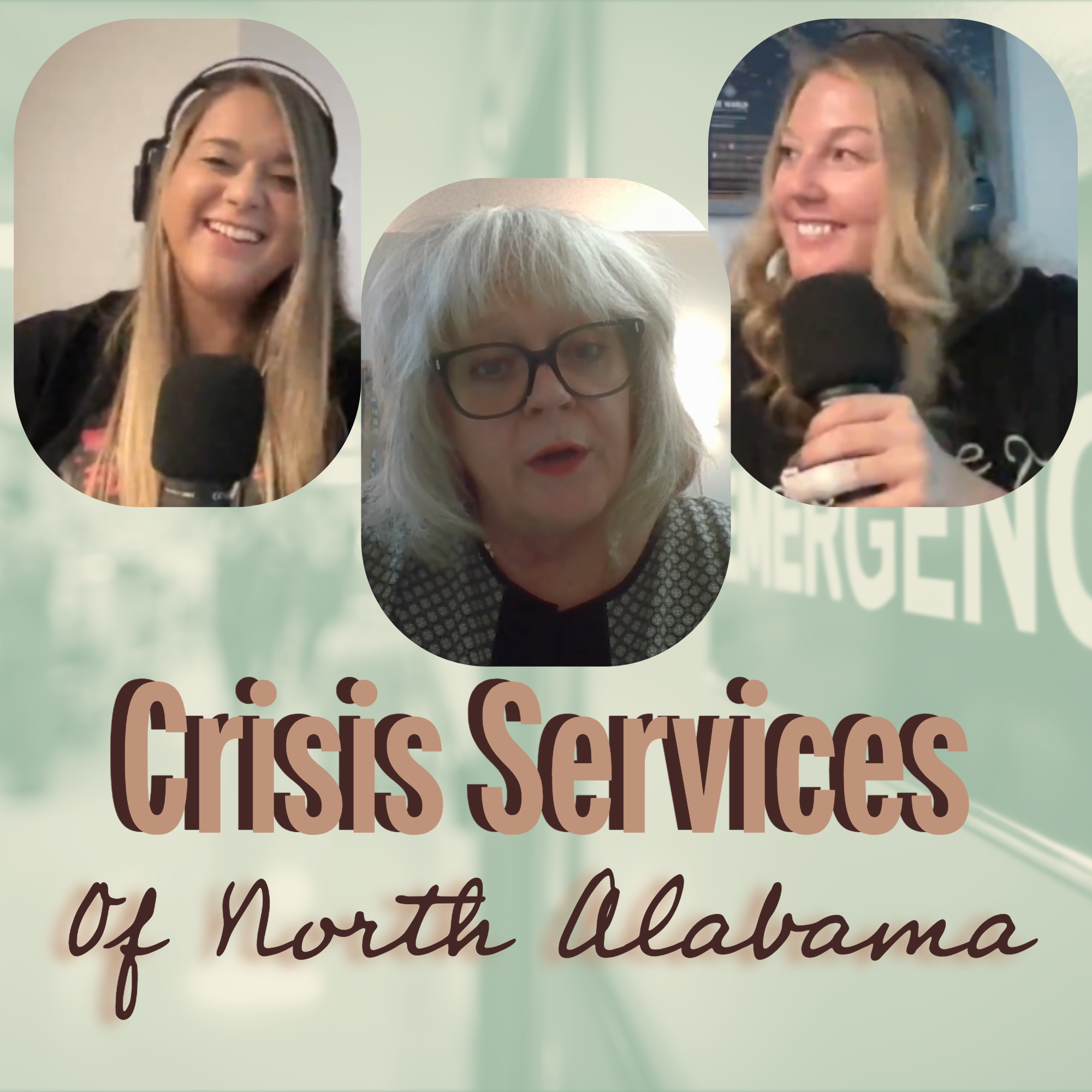
[00:00:00] Speaker A: Welcome back to Spill the Tea Unfiltered.
Hey, guys, Today we have a very special guest with us. We have Karen from the Crisis Services of Northern Alabama. Can you tell us a little bit about your.
Where you work and what you guys do?
[00:00:15] Speaker B: Yes. So at Crisis Services of North Alabama, we have a few programs that help people who have experienced either sexual assault or domestic violence. We also have a program, people who are in some kind of emotional cr.
So if you call that number and it's a local number to the Huntsville area, 256-716-1000.
You can get in touch with either of our two programs, or you can talk to the person that answers the phone about something that may be going on with you, like maybe you had a bad day at work or maybe had problems with your partner. You know, it's a range of things that we'll talk to people about. Like, no crisis is considered small to us, but it is the way that you get access to our sexual assault forensic exams. We have a bunch of nurses here that are forensic nurse examiners, and they will do evidence collection for sexual assault survivors and also work with the domestic violence survivors who may need to come in and get some kind of evidence about what happened to them.
And then our domestic violence program, which I think we're talking about today, includes Hope Place, which is our emergency domestic violence shelter. And we have a lot of programs that help out survivors of domestic violence that help them stay safe if they're not ready to leave. We have a safety plan that we can work on with them on. And then we also have programs to help them kind of transition away from that abusive situation and kind of get back on their feet. Because a lot of times there is financial abuse going on in isolation. So we help out with that and we have support groups for both.
[00:02:22] Speaker C: That's amazing.
[00:02:23] Speaker A: That is amazing because, yeah, financial abuse is.
I think a lot of people don't think it's as serious as it is. But, you know, I'm sure from a lot of what you see is that they don't have the money because the money's being controlled by the. By the partner, and so they have no access to the money. I was on the flip side where I gave him all my money, so he abused that and put me in $150,000 in debt.
[00:02:46] Speaker B: But.
[00:02:47] Speaker A: Yeah, but. But either way, it's both extreme financial abuse and a lot of times it's women that come out on the downside of it.
[00:02:55] Speaker B: Yes, that's true. I mean, we do have men come through occasionally.
But for the most part, our clientele are almost all women. But to speak to the financial abuse part, that itself makes it very difficult for anyone to leave an abusive relationship, obviously, because they feel like they don't have the resources to get out and they're worried about lots of things like that and what's going to happen to the kids. They have kids. Some people are concerned about their fur babies. You know, what's going to happen if they leave them.
And sometimes they've been isolated from their friends and family, so they really don't have any support. But we're here that this is the first place to go if that is going on with you, and we can help out in many different ways.
[00:03:43] Speaker A: Yeah. That's amazing that they. Because I think a lot of people don't realize there is, like, the. That kind of help. Like, they think it's, oh, it's just a shelter, but I need more than just a place to stay. Right.
[00:03:53] Speaker B: And we got a full range of things that we can do within that program.
[00:03:57] Speaker C: It's amazing that you not only support them with their kids, but also, like their fur babies, making sure to take care of everybody, because that is a concern. Like, you don't. If the partner is abusive, you obviously don't want to leave and leave your kids or your animal.
[00:04:11] Speaker B: So, yeah, we don't do anything with the pets. We have an organization that we can call and work it out with. They work it out with the survivor as to what's going to happen there.
[00:04:26] Speaker C: Well, that's good.
[00:04:27] Speaker A: Yeah.
[00:04:27] Speaker C: Yeah.
[00:04:28] Speaker A: And I like that you guys have people that do the sexual assault kits, because I think that's another thing that's really important. And a lot of people are scared to do it. One, because they don't understand, like, they're scared because they don't know what's actually going to happen and what's involved with the kit. Two, they're worried a man's going to do it because a lot of people think a doctor is a man in their mind, and they just don't want to be near another man after they went through that. So I like that you guys have that as a.
Another service to help, especially with, like. Because you need it for court. Sadly.
[00:04:59] Speaker C: Yeah.
[00:05:00] Speaker B: Yes. And the forensic nurses are highly trained on how to gather evidence and keep the chain of custody. So there's no time from the start of the exam to the point where everything goes in the box that anybody else touches it with that nurse.
[00:05:18] Speaker C: That's awesome.
[00:05:19] Speaker B: Yeah.
Also, we have advocates that come out like that.
They usually come here to our office to get the exam. And we have advocates that go out and meet with them in the lobby, explain what's going to happen, what to expect kind of the whole process to kind of put them more aims because it is obscure and you don't know what's going happen to.
And you've been violated so you don't really want anybody touching you but you, you know, you want to get the evidence that has happened. Right, right.
[00:05:55] Speaker A: You wanted to that to feel as least violating as it can on its own. So it's good to have somebody who's trained and knows how to talk to them and make them feel comfortable too.
[00:06:05] Speaker B: Exactly. And it's very trauma informed. So you know, when you, when you go get a pap smear, for instance, sometimes the person that is performing pap smear doesn't always tell you exactly where they're putting their hand.
[00:06:20] Speaker A: Right.
[00:06:21] Speaker B: And we give all that control over to the person who's been sexually assaulted or you know, they're coming in for a domestic violence forensic exam. So they're in control the whole time.
They can say no to anything.
They are not. We don't force them to do anything. So they had the agency already taken away from them once.
So we make sure that we, we let them lead.
[00:06:47] Speaker A: So that's awesome. And so obviously what you guys do, there's a lot of aspects to it. So speaking more with like the domestic violence and the services that mostly men, men and women can both use this, this service. But since it is statistically more women, that's kind of where we focus since we're women and we want to support women and, and you know, we never say it doesn't happen to men because it does. But statistically it just happens more to women.
[00:07:18] Speaker B: So it's 1 in 4 women and 1 in 7 men that will experience extreme domestic violence in their lifetime.
[00:07:25] Speaker A: Yeah. And so, and I'm, and, and men, we've had a lot of people on our like reels and stuff say well that's, that's just because that's only what men report. And I'm like, okay, but you can say the same thing about women. There's plenty of women who also don't report it. So if men are underreporting, women are probably also under reporting. So it's probably actually worse.
[00:07:46] Speaker B: So consideration when they do statistics.
[00:07:50] Speaker A: Right, right. And that's, and that's part of it too is, is like how would you, if you see people that like rebuke that or say, like, women, like, we get a lot of hate that women are worse than men. Like, it's just. There's a lot of men out there who say things like that who are like, you guys are the problem. You guys are. You guys are abusive too. And, like, they turn it. You know what I mean? Like, it's not a competition. We're not trying to compete. We're trying to bring awareness to women's, like, abuse.
[00:08:18] Speaker B: Well, you know, wanting to gain control over another human being has more to do with your personality than your gender, your sex. So that's really more of a societal problem, I think, than it is and a cultural problem than it is that, you know, men do this. It's like, it's part. It's part of the fabric of our society at this point. Right, yeah.
[00:08:39] Speaker A: Yeah, I agree.
[00:08:40] Speaker C: Absolutely.
[00:08:41] Speaker B: The important thing is that people know that we exist here, and we do try to go out and communicate, you know, with people about what we do and who we are.
But a lot of people don't even realize that they're in a domestic violence situation.
[00:08:58] Speaker A: Yeah.
[00:08:58] Speaker B: Until they get the information. I mean, it's. It's hard. Like you said, it's hard to believe that financial abuse is abuse.
[00:09:06] Speaker A: Right. People think physical. When people think domestic violence, they only think physical. And it's like, no. Emotional abuse and financial abuse are still abuse.
[00:09:13] Speaker B: Mental abuse, threatening you.
You know, like, a lot of times when you have someone in the LGBTQIA community, their partner may threaten to out them.
And that's the point of the piece. Yeah.
[00:09:29] Speaker A: Oh, I bet that is absolutely trauma. That would be completely traumatizing if they're not ready, like I would imagine in the South.
[00:09:38] Speaker B: Yeah.
[00:09:39] Speaker A: What is something that you wish, like, more people understood about survivors leaving abusive relationships?
[00:09:48] Speaker B: So if you have a friend that says, hey, I've noticed this happening, so really think about it, you know, and people probably know that they're in a toxic relationship. They may not understand the extent of it, but once things start getting physically violent, because that's when your life is in danger. Right.
Calling a place like Crisis Services or calling the Domestic Violence Hotline, we. And they can help you figure out how to get out.
Because you've got to have a plan.
You have to get all your documents together. You know, you've got to make sure that your partner does not find your bag, your bug out bag, basically.
And you need to, you know, involve people that you trust to help you out.
But, you know, a lot of times people don't think that far in advance you know, they're always thinking it's going to get better, this person's going to change, and it just isn't.
[00:10:51] Speaker A: Yeah. What's your advice for that? Like, people really do think that people can change. And I think in my mind, the older we get, the less likely we are to change. So I'm like, I don't, you know, the cheating, you know, because people always say, once a cheater, always a cheater. Same thing. I feel like with abuse, like a lot of times people who are abusive are going to continue to be abusive because that's just innately who they are.
[00:11:12] Speaker B: Well, and it takes an average, just seven times of someone leaving, actually finally leave. Right? Yeah. So it's a very, it's a very difficult situation. I mean, a lot of people, why don't you just leave?
You know, this person's treating you horrible and it's not that simple that that person has psychological control over.
Yeah.
[00:11:33] Speaker A: Do you have any like warning signs, like a young person that's getting ready to start dating, like, what are some warning signs you would give that person to say this is manipulation or this is abuse or it could lead to like, these are some red flags that could lead to that.
[00:11:47] Speaker B: Yes. And we do have a lot of information about that that we hand out when it comes to dating.
It's kind of the same red flag.
Maybe not the financial control, but you know, control over who they let you see, how much time you spend with people wanting to track you, wanting to see your phone, wanting to see who you're talking to.
Love bombing is a big thing that goes across the board no matter what age you are or even, you know, rape happening, you know, in a domestic violence, in a domestic violence situation, in any marriage or partnership, rape can happen because it's not if it's non consensual.
[00:12:32] Speaker A: Yes, absolutely.
[00:12:34] Speaker B: There is nothing. Absolutely 100% yes.
Then it's, it's no go.
It has to be an exuberant yes.
[00:12:47] Speaker A: And there are people out there who believe that if you're married to them, then you're theirs. You're, we're in a relationship. You, your body is my body. And there's no body like autonomy for woman in relationships like that, that of
[00:12:59] Speaker B: ownership is part of the control. Right.
[00:13:02] Speaker C: Well, there's men out there that say, well, if you don't want me to cheat on you, you should just give it to me anytime.
[00:13:06] Speaker B: Right? Yeah, yeah.
[00:13:08] Speaker A: And I know that there was a big thing in the EU where one of the women, they're trying to change the definition of rape. And they're trying to be like, if it is not a yes, like an actual yes, then it is rape. So, you know, you can't sit there and be like, well, they had drinks, you know, blame like all the other ways that they blame and stuff. It's like, no, no, no. If they did not say yes and they were not cognizant and able to say it, then it's
[00:13:37] Speaker B: right. Yeah, it's not a yeah.
[00:13:40] Speaker A: Right.
Well. And I think for young people too, that's what worries me. Like, it's because they'll get pressured, like, to lose their virginity and everything else. And so then it just becomes this huge, like, pressure bucket of. Because you have hormones going on and you have manipulation going on and, and depending on what people are learning. Because sadly, with the Internet being the way it is today, it is a lot easier for these kids to learn stuff, so.
[00:14:07] Speaker B: And sometimes the wrong stuff.
[00:14:08] Speaker A: Right, right, right, right. Yeah, that's, that's the bad thing.
[00:14:12] Speaker B: You know, sex is still so taboo to talk about. Kids, like, if we don't tell them, they're not going to do it.
[00:14:21] Speaker A: Right, right.
Yeah, it doesn't work that way. And that's the thing is there was still like a huge push for abstinence. And I know that they were, I think they sadly passed something in our state to get rid of sex talks in schools. And I'm just like, what are we doing? Like the kids are gonna do it. So now you're taking away a health program. You are taking away something that could help make it healthy for them.
[00:14:42] Speaker B: And even if they, even if they did something just relationship wise, like we, we had a program that we lost a grant for that was healthy relationships. And we had someone that went out into the schools around here, talked to middle school, high school, college age kids about what to look for red flags and green flags basically, and don't even really have to talk about sex to do that.
[00:15:09] Speaker A: Right, right.
[00:15:10] Speaker B: Be on the lookout for these things and if you, if you see them get out.
[00:15:17] Speaker C: I think that like with domestic violence though, like, because I remember in high school, like we had classes and they talked about that stuff too. But I think when you're like a teenager, like, you want to dismiss things so easily too.
[00:15:28] Speaker B: Yeah.
[00:15:29] Speaker C: That like when you're in love, you're like, oh, no, that's okay. Like, he loves me, he loves me. And in reality, like, coercive control takes over and then, you know, then it's sexual, sexual violence and then it becomes physical. But it like Builds up, right?
[00:15:45] Speaker B: Yeah. And that does happen. That, that's a common thread to both dating violence and intimate partner violence or domestic violence.
It builds over time.
[00:15:58] Speaker A: So how can friends and family better support people?
Like, obviously the main thing is, is people are gonna. You can't force them to leave.
We know that doesn't work. So what can they do to. To be there and support people in their lives that are going through abusive relationships?
[00:16:17] Speaker B: Well, the most important thing is to believe them. If they tell you, don't say, oh, that person would never do that. Or dismiss how they're feeling, or dismiss the intensity of whatever is going on.
And you really don't have to say anything, but I believe you. I'm so sorry this is happening to you.
If there's any. Anything you need, what do you need right now?
Never corner them and say, tell me what's going on or what, what happened? You know, just let them kind of lead the way. Just let them know that you're there for them. And don't tell them you should leave, because they probably know that.
But they, they are in this bond with this person that it's very hard to break.
[00:17:06] Speaker A: Yeah, they're in a trauma bond.
[00:17:08] Speaker B: Yeah, exactly.
So it's best to just be open to whatever they say to you. Become a. Become a safe space if you didn't think you were already.
Become a safe space and just be there for them when something happens and they decide that they're gonna leave.
[00:17:28] Speaker C: Can you tell us some of the success stories that you've seen working in this field?
[00:17:33] Speaker B: Yes. So we have a client named Val, and she's been very vocal about her story, her journey.
She told her story for the first time at one of our events and she said, I'm a first generation domestic violence survivor and think about what that means.
That means that the women that came before her were all also in domestic violence relationships. So she grew up with it. She saw her aunts that way. She saw her grandmother, her mother. You know, everyone around her was experiencing this. So she goes on, gets into a relationship, it turns into, you know, domestic violence.
She gets in the car, doesn't even recognize herself when she gets in the car. And she heads to our shelter, she calls our number, and they patched her through to the shelter to take in some information.
And then they tell her where to go because it's a non disclosed location. Right.
For obvious reasons, she got out with her two girls, and that's been maybe four or five years ago.
And both of her girls are in. Well, one started Graduated from college. The other one's in college.
Val herself went on to be like a quality control manager. Has a really good job.
[00:19:03] Speaker C: It's awesome.
[00:19:04] Speaker B: Loving her life. And if you were to meet her, she just has this presence about her.
And I always wonder, you know, did he just want to beat that out of her because she was so, she's so lovely and I could never. And she's strong.
I could never imagine her being in that situation.
But you never know.
[00:19:29] Speaker C: That is the thing though, like, you can be a very strong minded person.
Because I've been told my whole life that I'm strong minded, bullheaded, you know, but like, my mom couldn't believe that I had landed in that situation. Yeah, she begged for me to get out of it.
[00:19:45] Speaker B: Yeah.
[00:19:45] Speaker C: I just, it had to be when I was ready. But I mean, you can be a really strong minded person and still fall into that.
[00:19:52] Speaker B: Exactly.
[00:19:52] Speaker A: Yeah. I tell people a lot of women are like, how was I so stupid? I was like, you weren't stupid.
And like, what's her favorite saying?
[00:19:57] Speaker C: You didn't, you didn't know what? You didn't know. Give yourself grace.
[00:20:00] Speaker B: Yeah, exactly.
[00:20:01] Speaker A: So because you just like, I, I again, me too. I feel like I'm a pretty intelligent human and I still got in a situation where I was being cheated on by 20. He cheated on me with 20 plus women. He hid children and then the debt. And like, I am like, how did I not see this coming?
But they're good at hiding, they're good at manipulating. And you just have to like, you know, give yourself grace. But they go after smart, intelligent women. They're not just going after people who they can deem weak. They're going after people who they also deem strong.
[00:20:34] Speaker B: Yeah, it's a challenge.
[00:20:37] Speaker A: I'm so glad that Val made it out. That's, that's great. Has Val dated again since then?
[00:20:43] Speaker B: You know, I don't know. I haven't talked to her in about six months, so. That's a good question.
[00:20:48] Speaker A: Yeah, I'd be interested. Maybe we'll talk after. Maybe we can get Val's info and see if she wants to come on the podcast.
[00:20:53] Speaker B: Yeah. Oh, she might do that. She, yeah. Been very vocal about it. Her story is really interesting.
I don't think she has, though.
[00:21:02] Speaker A: I don't blame her. I don't blame her. I haven't at all.
See, see?
Do you, like, so what brought you to work this? Like, what made you want to work this stuff?
[00:21:14] Speaker B: So I had asked my husband to leave and I Had to get a job. I was. I was a stay at home mom, not worked in the workplace workforce for 15 years. And a friend of mine who was on the board said, I think he would really do well at crisis services in North Alabama. And I was actually thinking about that, that maybe I needed to see what everything was right because I was in that position where I didn't understand what was going on to me going on. But I have a marketing background, and she just thought it would be great for me to come and do development here.
So I kind of fell into it.
[00:22:00] Speaker A: That's awesome.
[00:22:01] Speaker B: But it's, it's. It was really eye opening the first year because I was in charge of social media and I was having to dig in and. And, you know, get information and put stuff out there. And every day I was like, oh, my God.
Oh.
Oh, that's what that was. Okay. All right. Yeah.
[00:22:24] Speaker A: Like, I was abused.
Yeah.
[00:22:27] Speaker C: So do you feel like you kind of healed through learning about it? Like through working in the field helped you heal as well?
[00:22:33] Speaker B: Say that now. I could not have said it two years ago or even a year ago, because it was still very. It was still very raw.
Yeah.
[00:22:44] Speaker A: Yeah. And I mean, mine's been. It's been almost two years since I caught him having the affair, and it's still really raw for me. And I'm like, people are like, you'll find your person. And I'm like, that's not helpful. And why do I have to have a person? I have cats, I have friends.
I have a great community. I don't need. What is this person you're referring to? I have my person. She's here.
[00:23:04] Speaker B: It's me.
I think that that may play into some of this as well. Sometimes people are forced through either their community or just the expectations of the society that we live in to become a couple.
And sometimes people fall into that when they've got it in their head that they need to be with someone and they don't need to be with someone.
So it. It sets up this.
I'm where I'm supposed to be. Why is this happening? And a lot of times there's a lot of shame with that too. Why am I letting this happen?
And that's. That's another reason why people don't come forward. They feel shame, they feel guilty when it's not them, you know? But yeah.
[00:23:52] Speaker C: Yeah.
[00:23:53] Speaker B: What did you do to. To have him slam you against the wall? What do you think?
[00:24:00] Speaker A: I get that all the time. What did you do to make him cheat so you weren't putting out. I'm like, that's not a reason to cheat, first of all. And that's not a thing.
[00:24:06] Speaker C: But okay, I was too embarrassed that I put myself in that or like that I felt like I had put myself in that situation, allowed it to happen, to ever report it. Like, I just wanted out. So like, yeah, I just finally like went to my mom's house and I'm like, mom, I'm home. And she was like, what do you mean? I was like, I am home. And she started crying but like, could never call the cops. Like, I was too embarrassed by the situation. I didn't want anybody to know my personal business. I just wanted out.
[00:24:35] Speaker B: Yeah, exactly.
[00:24:37] Speaker A: Yeah. I think it's.
Society has a lot to do with it because, like, I'm child free by choice and I get a lot of hate for that. And I think it's just. Yeah. In society people are like, you are supposed to get married and have kids. That is your job. And if you aren't doing those things, then you are worthless as a woman.
And it gets in a lot of people's minds. And I'm like, no, look at all these powerful women who don't have kids or do but are single, momming it and kicking it and doing amazing jobs like it. It's not to take away from those who are in healthy, happy marriages and families, but there's a whole other side where you don't have to have that. You can be just as happy. And, and studies have been showing lately that people that are single are actually happier.
[00:25:19] Speaker B: Yes, I've seen that. I've seen that studies.
[00:25:21] Speaker A: Yes. And I was just like, huh, I'm right.
And like all these studies coming out about like 50 of women are single and like stuff and like, you know, the male loneliness epidemic. And I'm like, this isn't like it's another way to blame women. They're still blaming women by saying that.
And I'm like, let's not, let's stop abusing women and just let women choose. How about we let women choose?
[00:25:46] Speaker B: But that's, that's another power structure. Right?
So we get told a lot of things about ourselves that aren't true.
[00:25:53] Speaker A: Yes, yes.
Yeah. And I'm sure that's hard, especially for women who have been beat down. Like, it took me a long time to feel comfortable with my body again and myself just because I was just like, was it because I was fat? Was it because I was, you know, you know, all these awful things that you think about yourself and Then if you. If you're out on social media, people are ruthless.
So then you have to, like, you know, get in a mental space where you can handle those things being said.
[00:26:19] Speaker B: And. And. And that takes a lot of energy to do that.
[00:26:23] Speaker A: Yeah. And a lot of energy that I'm sure a lot of people getting out of stuff just don't have. I did at first, literally.
[00:26:31] Speaker B: Yeah.
[00:26:32] Speaker A: Literally not die.
[00:26:33] Speaker B: Yeah.
[00:26:33] Speaker C: Yeah.
[00:26:34] Speaker A: So when you have people. Because that. Bringing up. Literally not dying, suicide.
Do you guys have, like, I know there's a suicide hotline, but a lot of people don't call it either. Like, if they call you guys, do you have services for that as well, or do you hook them to the suicide hotline? Like, how does that.
[00:26:54] Speaker B: We get a little bit of everything with that. So if someone calls us and they want to talk and we feel like they need to talk right now, then we will. We will definitely talk to them.
I don't want to say we do triage, but sometimes we feel like it's better for them to call the national hotline because they. They're specialists.
[00:27:15] Speaker A: Yeah.
[00:27:16] Speaker B: Kind of journalists. Right.
I've even talked to someone who had a plan, had a means, and was ready to do it. As soon as he got off the phone with his wife after her break, he had. He had a complete plan.
And that's terrifying to hear somebody say that, because the first thing that we have to say if someone calls, we had to, you know, if. If they don't say it outright, we have to say, are you planning on killing yourself? We make them say that because that makes it real. Right.
And do you have a means?
Do you. Do you have a plan when you do it? What do you do with. You ask them all these questions, and sometimes it's pretty terrifying because they have it all figured out.
[00:28:05] Speaker C: Yeah.
[00:28:06] Speaker A: And people go down a very, very dark road. And I think that's another thing with the shame and the being a strong woman. I was down that road.
[00:28:14] Speaker B: Yes.
[00:28:15] Speaker A: And my mom, when I called her, crying, and she, like, rushed down here, her and my dad both came, and my mom wouldn't leave and go back with him because she could tell that something was wrong. And I was over there googling, like, how much of this prescription drug do I need to take?
[00:28:28] Speaker B: Right. Yeah.
[00:28:29] Speaker A: And. But then I didn't want my mom to be the one to find me and her be alone.
[00:28:33] Speaker B: Right.
[00:28:33] Speaker A: And I. And I was already in therapy because I. I'm a big proponent of therapy. I've been in therapy eight years, and so I Was already in therapy, but, like, I had emergency sessions with her, and I would have, like. I started ramping up my sessions with her to try to, like, work through this because I was in such a downward spiral. And I think people make light of it a lot and they're like, oh, you're just one attention or you're not actually going to kill yourself. And I'm like, that's not helpful in any way. And people that are on these spirals, that's. They're on a spiral, like, you need to let. You need to take it seriously.
[00:29:12] Speaker B: Right.
[00:29:13] Speaker A: I guess same thing with domestic violence. You need to believe them.
[00:29:17] Speaker C: Yeah.
[00:29:17] Speaker B: Yes. Believe it. I mean, you know, we don't. We don't get people calling to test whether or not we're going to believe them or not.
And we have our. The people that answer the phone on helpline go through pretty extensive training on how to respond to trauma and how to respond to someone who is in a bad situation, whether it's physically, mentally, emotionally.
We lead with listening. We do active listening.
And we let them tell their story. We don't interrupt them. We don't tell them what to do.
We let them talk.
Yeah. We may try to guide them through questions, you know, to some kind of resolution, but we never tell them what to do. And I had somebody get mad at me one time because I wouldn't tell her what to do.
That's not why I'm here.
[00:30:15] Speaker A: We have a friend who tried to go to therapy, and she was like. I was like, how was it? She was like, I didn't like it. They didn't tell me what to do. I was like, that's not a therapist job.
But some people just. They're like, I want my problem solved for me. And it's like, no, no one's there. No one is.
[00:30:29] Speaker B: You.
[00:30:29] Speaker A: Yeah, you got it. You got to put in the work.
Do you guys. Is that job, like working in the call center? Is that something people can, like, volunteer, or do you have volunteer positions? Like, if somebody wants to get involved with something like this?
Obviously, I'm guessing background checks have to be done.
[00:30:44] Speaker B: Yes.
[00:30:45] Speaker A: And stuff. But are there opportunities for people who want to get involved?
[00:30:49] Speaker B: Yes, there are several. Everyone has to go through helpline training before they volunteer. They're going to be working with clients.
Helpline training is eight weeks, seven. Seven and a half weeks.
It's twice a week for about three hours a night. It's pretty intensive. And they're just now wrapping up a session. We have three a year. And if you follow us on Facebook or Instagram, you'll see it pop up. We didn't do it this time because we had a lot of people in there. So we can only be training so many people. If you go through helpline training, and I can't remember what the time frame is, but you have to spend some amount of time on helpline training, working with people on the phone, and then you can become an advocate, which is the person I was telling you earlier that meets with the survivor client, explains what's going on, and they actually go back into the room too.
They're like their support system while the person is here. So if they notice that there's some tension happening, they'll say, hey, do you need to take a break? So they're there to kind of watch that, but mostly to be there for them and make sure that they're.
They're speaking up if they need to speak up. And it's a lot of. Kind of getting in to that person's mindset and just watching them and being very observant.
And then we have the Domestic Violence Responder program, which is a program that we have in conjunction with the Huntsville Police Department.
And when they go out on domestic violence calls, we have someone from crisis services that will go out with them, and they have a backpack that's full of all kinds of information, you know, about our services, what's available to them through the state, you know, things to help them kind of calm down their nervous system. We've got, like, quilts. We've got stuffed animals for the kids and bubbles, you know, because the kids are survivors too, right? Yeah. Just because they're not the ones getting hit doesn't mean that they haven't experienced what's been going on.
[00:33:03] Speaker A: Right.
[00:33:04] Speaker C: Right.
[00:33:05] Speaker B: So they. They are considered people that need to be in shelter as well. Right.
Even if the partner would never touch the kids, the kids are still part of. Part of that dysfunction. Right.
So those are the three ways that. That you can volunteer.
[00:33:25] Speaker A: Oh, that's awesome. And so you said social media is the easiest way to see anything and get involved. And we will link all your. Your socials to our podcast on our socials, as well as the YouTube video and everything else. So we will link that, but let people know in case they are just listening. What is your social handle for social media on Facebook?
[00:33:50] Speaker B: It's Crisis Services of North Alabama, all spelled out on Instagram. It's Crisis Services of nal, I think, or North Al, I can't remember.
[00:34:04] Speaker A: Okay.
[00:34:05] Speaker B: It's one of Those. But if you search for Crisis Services of North Alabama, it'll come up.
[00:34:10] Speaker A: It'll pop up. Okay, perfect.
[00:34:12] Speaker C: Okay, great.
[00:34:14] Speaker A: So I just wanted to end with one last question, like, what are changes you would like to see in the legal system or in my community support?
[00:34:23] Speaker B: Well, let's start with the legal system.
There are times when protection from abuse orders are denied, and sometimes that can be valid because someone may have overestimated the danger that they're in, which I don't really believe that's the case, but that may be what the judge sees. Right.
But the paperwork, the PFA paperwork is a little confusing, and we have people here who will help you fill one out.
But, you know, sometimes you need help with that because there's a lot of information that if you don't provide that information, it gets kicked out.
So that's a barrier in itself.
It's, you know, having difficult paperwork to fill out to protect yourself. Right. A lot of what it comes down to sometimes, too, is just who has the better representation in court.
It would be nice if victims could have some way to get better representation.
Right. And that's with every. I mean, that's with everybody who's a victim of crime. From a community standpoint, just knowing what the signs are, both for yourself and for people that you love, would go a long way to helping at least identify this. I think catching things early when people are kids and modeling healthy relationships, even if it's not in their own home, maybe their friends, parents, work really well together, love each other, don't have any kind of toxic dynamic going on.
That's very important for kids who are in that situation. But as they grow and they.
If they. If they're given that baseline when they become older and they get into situations where that's a possibility that they could, you know, either be a victim themselves or hopefully not be the abuser, they can recognize it better. And hopefully they would be the abuser if they've had this whole education going on. The whole relationship is.
[00:36:33] Speaker A: Yeah, there's so many things in the legal system that are broken, and it's going to. It would. It's going to take a long time for that to change. But I really hope that community support is something that changes sooner. And also, so that our listeners know we're. We are going to raise funds for the crisis service in North Alabama. And so we will put a link out for that. And then Karen is going to give us an actual list of what is actually needed. So that way we can make sure we buy things that are current and needed and so they're not just getting repeat donations of the same things over and over again. You guys will see that coming out so well. Thank you so much, Karen, for coming on.
It was such a good talk. I think that we're really excited to let everyone know that these services are available in our area. But then also like we'll put the national hotline as well down for people so that they wherever you are and wherever you're listening, you can also get help if you need it.
But thanks everybody and we'll see you next week. Bye, guys. This episode is proudly brought to you by the law firm Ryan and Rouse. If you or a loved one have been injured or need legal help for changing family circumstances, contact the personal injury and family law attorneys at Ryan and rouse today at 256-801-1000 or visit them online at www.alabamalaw.com. when your future is on the line, don't go at it alone.