

View Full Transcript
Episode Transcript
[00:00:00] Speaker A: All right, welcome back to Spill the Tea Unfiltered. Hey, guys, today we have a guest with us. We have Tess. She has the Half Serious podcast. So she is another local person who has a podcast here, and so tell us some about it. Tell us about your podcast.
[00:00:15] Speaker B: I don't want to tell too much about it because it's very gritty for those that aren't prepared for the level of stuff that we talk about, but it is.
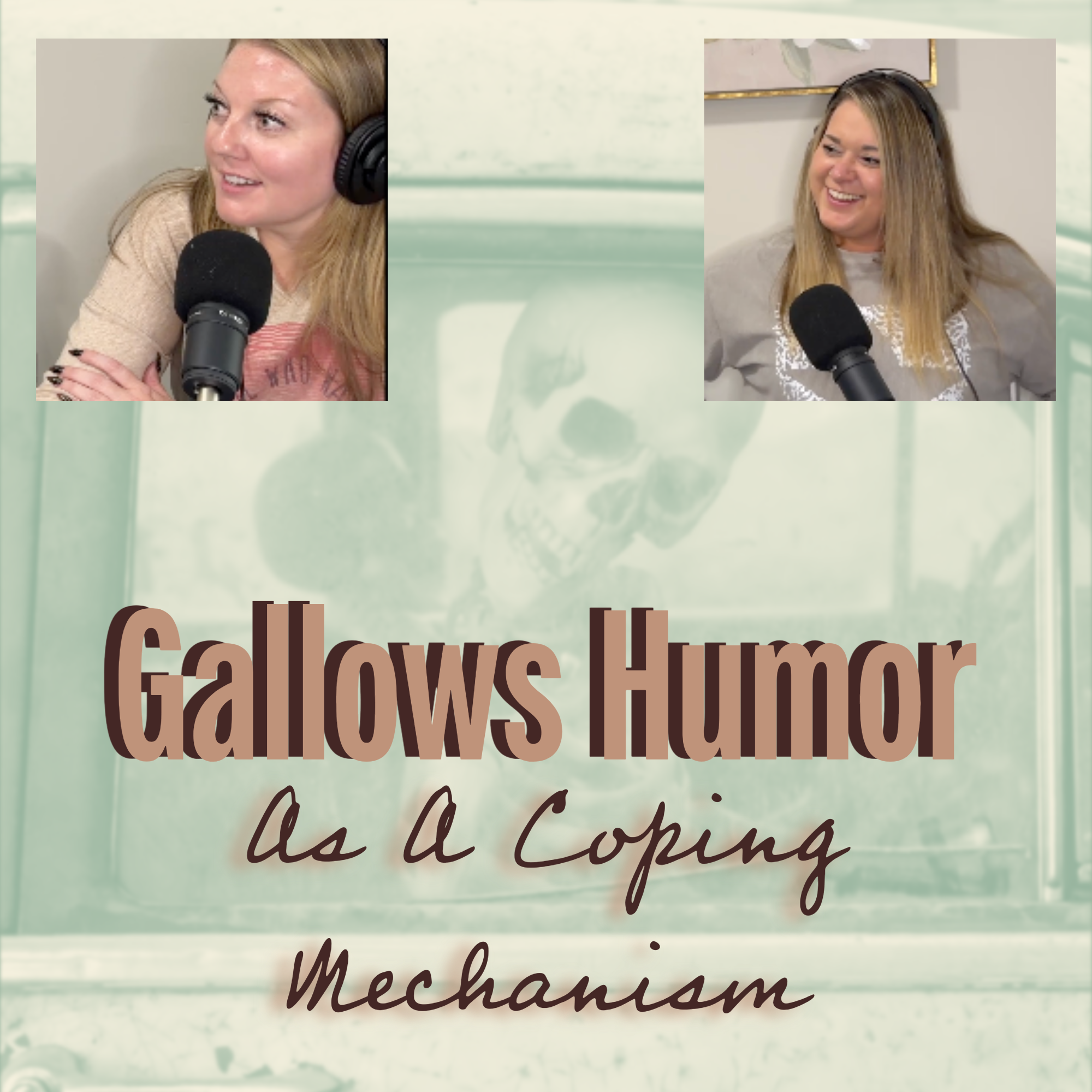
Our tagline is trauma, grit, and gallows humor, because nobody kind of goes through the stuff without coming out of it with a little bit of gallows humor. Probably too dark for the normal. Normal day to day, but it helps us and gets us through.
[00:00:35] Speaker A: Yeah, and same.
I think that's one of the things when we met, like, we have that in common. I very much so have gallows humor, and much to the dismay of a lot of people, I say things that I shouldn't all the time, and I'm constantly laughing at stuff that is so inappropriate to laugh at, but I'm just
[00:00:52] Speaker B: like, oh, well, look, have you gotten those weird stares yet where they're kind of judging? You're like, oh, I thought it was funny, though. Yeah.
[00:00:58] Speaker A: Yeah.
So, yeah, it's. It's pretty. It's pretty wild. But, yeah, so you've been doing it for about as long as us. When did you start?
[00:01:07] Speaker B: Oh, no, I've only seven months, maybe.
[00:01:10] Speaker A: Okay. Yeah, because we start. We. We hit a year. April 1st was when our first episode dropped.
[00:01:15] Speaker B: Congratulations. Or early congratulations.
[00:01:16] Speaker A: Yeah, it's coming. So.
But yeah, so it's. It's funny that, like, a friend, a mutual friend brought us together and so that she had two different people in her life start a podcast, and she was like, you're a badass and she's a badass, and these badasses need to meet.
[00:01:31] Speaker B: But then I'm like, is this just, like the age that I'm in now? Like, everybody at our age is just like, oh, let's start it. I say our age. I don't know how old you are, but everybody's a millennial. We're gonna start a podcast now. Is that just where we're at?
[00:01:42] Speaker A: I do think that's where we're at because I have another friend. He just turned 40, and he just started a podcast, like, last week. So. So I do think, you know what, maybe it's partly because we have so much wisdom that needs to be imparted.
[00:01:55] Speaker B: Sure. Yeah. That's it.
[00:01:58] Speaker A: I'm like. I'm like, they need to know Like, Jim Z needs to know what's. What's coming.
We're just living through another historical event. That's what's happening. And we're all like, you know what? Let's just keep going. Here we go again. Let's just keep going.
[00:02:11] Speaker B: I think it's because nobody really gives a shit anymore. We're like, hey, listen, this is how it is. And we're going to tell you how it is because we've lived through it 30,000 times.
[00:02:18] Speaker A: Liter. Literally, like another historical event. It just cracks me up every time because I'm just. People are like, I saw a meme the other day that was like, is this your first world war? Like, welcome.
Like, is this your. Is this your first one? First time here? And it's like a millennial. Just like drinking out of a wine bottle. Because we've been here and we've done this.
It was pretty entertaining. So. But on top of being a.
Doing your podcast, you are a retired lieutenant.
[00:02:44] Speaker B: Yes.
[00:02:45] Speaker A: With police.
[00:02:46] Speaker B: Yes. Retired now for.
You're in six months. Something like that.
[00:02:50] Speaker A: Which congrats to you.
[00:02:51] Speaker C: Congratulations.
[00:02:52] Speaker A: That's awesome.
And that's actually one of the reasons too, that I wanted to have you on, because we've been wanting to have someone on that works in the law enforcement community, specifically, like, local.
Because laws are different.
[00:03:06] Speaker B: Yes.
[00:03:07] Speaker A: And it all, like, everything just 100% depends on where you live and everything else. So obviously anything you tell us about is going to be local here to the state of Alabama, but probably also goes, you know.
[00:03:21] Speaker B: Yeah, they sister up to each other quite a bit, state to state.
[00:03:25] Speaker A: Yeah, they do.
So I think one of the things I will want to talk about is maybe like some domestic violence situations. Like, can you tell us, I guess, like, just starting out, like, what is actually considered like, domestic violence, like, in the law? Like, what does it encompass?
[00:03:45] Speaker B: Pretty much anything that's going to include violence with different levels of family.
Now, the definition of family, what's considered domestic has changed over the years. Like, when I started, it was brother sister, you know, no longer brother sister. So that, that part of the law changes.
And I don't remember the last time it changed. It'll probably change again. But typically it, you know, if you're married or dating or stuff like that is solidified as a domestic. So if you guys get into an argument where there's threats or shoving, you know, any kind of assault, anything like that, it's always going to fall under domestic.
[00:04:22] Speaker A: Okay. And I heard, because I. I guess, like, growing up as a woman, I Don't know if it's naive to. To think this, but can you be arrested for defending yourself?
[00:04:37] Speaker B: So you. You can and you can't.
It's the great way to say it. A horrible way to say. Ideally, in an ideal world, when you defend yourself, no, you won't be arrested for it. But we don't live in an ideal world. And unfortunately, a lot of the stuff, when law enforcement arrives, it isn't so cut and dry. Like, oh, yeah, this is definitely what happened. You know, it's not like the movies or the TVs, where it's like, oh, the blood spatter. Okay, in 24 hours, I'll know exactly what happens.
[00:05:00] Speaker A: Right.
[00:05:01] Speaker B: But the best way to.
To document and to prove that you were defending yourself is to actually be the victim that you are. Because a lot of times, especially I think we don't want to be victims of things. We're like, oh, no. Well, I mean, you know, I was just kind of scared, but he wasn't that scary. Well, no, just. Just say what happened and tell the story. And all of this stuff does come out in the wash. And in my experience, I've never come across one where the victim. Where we. Who we thought was the offender turned out to be the victim after an arrest occurred.
There's sometimes we can't tell, and there is a dual arrest, But. And it does come out in the court system, and I have never seen it actually come to fruition where somebody is charged and it's like, okay, no, they were the victim because. Because police officers don't want people to go to jail. That's the victim.
[00:05:47] Speaker A: Right.
[00:05:47] Speaker B: And do what they can to figure that out beforehand.
[00:05:49] Speaker A: Okay, yeah, because I think that's one thing. It's like. Because obviously we're taught, like, defend yourself, you know, so it's hard because it's like, if you hit me, I'm. I want to hit you back.
[00:06:02] Speaker C: I'm gonna throw hands.
[00:06:03] Speaker B: Yeah, good.
[00:06:04] Speaker A: I'm gonna do it like, I'm here.
[00:06:06] Speaker C: I'm gonna admit it.
[00:06:07] Speaker B: I have, and I will.
[00:06:08] Speaker C: I'm gonna do it.
[00:06:09] Speaker B: I'm gonna throw hands.
And.
[00:06:12] Speaker A: And so, you know, I think my ex would be like, don't make me call the police. Like, try to threaten it. Be like, if I call the police, you're going to jail too, and stuff like that. And he knew that, like, I would freak out with my, like, for my job and stuff and be like, oh, no, don't.
But I think a lot of men. A lot of men won't because they don't want to admit that their girl beat the living God out of them.
[00:06:37] Speaker B: Yeah.
[00:06:38] Speaker A: But I guess it just comes down to, like, if a. If a guy does have, like, it's a he said, she said. Because if. If he does have, like, scratches on him or, like, obvious, like, she defended herself, but he says, oh, she did it first, then more than likely they're both going to go.
[00:06:54] Speaker B: Usually we can figure out who. Who has defensive wounds and who was the aggressor. And you can usually tell just with body language and who's saying what upon arrival. Because even though to them and to whoever's calling, to them that's a very new circumstance, they've probably been to three more that day before then. So to them it's just a cadence. And they can read the body language and they can read what somebody's saying. And look at the circumstance and the previous calls that we've gotten there, what neighbors say, all that other stuff. So there's a lot of stuff that feed into it. That feeds into it. Not even mentioning the actual investigation portion of it. So I've.
Again, if somebody feels like they gotta defend them, defend yourself.
[00:07:31] Speaker A: Yeah.
[00:07:32] Speaker B: You know, let that stuff come. Because if it comes down to it, where it's your life and. Or, you know, maybe serious injury, freaking defend yourself.
[00:07:40] Speaker A: Well, what is that thing that it's better to be judged by 12 than carried by six?
[00:07:44] Speaker B: Yes, exactly.
[00:07:45] Speaker A: So, yeah, I know that there are,
[00:07:47] Speaker C: like, ways to be able to tell, like, if you've been strangled other besides just like.
Like you can look in the eyes and such for that.
So I have been told by cops. But like, that there are other things that they do look for.
[00:08:00] Speaker A: Yeah, yeah.
[00:08:00] Speaker B: They'll look at neck injuries and they're. Again, that's a way past my comfort zone of like, the medical aspect of it. But they do analyze the neck and stuff, stuff like that, and kind of see where the damage is.
[00:08:11] Speaker A: That makes sense.
And that's good that it's not just like a. Well, now everybody goes to jail.
[00:08:16] Speaker B: Yeah, yeah. I'm not saying I haven't ever done a dual arrest. It does happen, but typically it's because it does seem 50, 50, like they're going at each other the entire time.
[00:08:25] Speaker A: And then they're probably still going at it. When you're trying, when you're there, they're
[00:08:29] Speaker C: still like Velcro trying to go at each other. Yeah.
[00:08:32] Speaker A: And you're like, hi, police, Police here.
[00:08:35] Speaker B: This is. This is when you stop.
[00:08:36] Speaker A: Yeah, yeah. Is that like a. A pretty sadly Common thing that you've
[00:08:41] Speaker B: dealt with, uh, where people won't separate
[00:08:43] Speaker A: or, or just domestics.
[00:08:45] Speaker B: Oh yeah, yeah. But that's a good. Once you get old enough, like senior enough in the ranks, people will take the domestics from you cause you're so tired of having to answer them. So after a while the rookies will just take them for you.
[00:08:55] Speaker A: Nice.
[00:08:55] Speaker B: Uh, but yeah, they're. It's domestics I say are most of the calls during the day for, for the areas of town that I worked in.
[00:09:03] Speaker A: I, I read something the other day cuz it was like it was a crazy amount of people that searched how to get away with killing my wife.
And like it's one of like the top trending like things to Google. And so like women are constantly like women are mostly killed by someone they know and a spouse.
[00:09:22] Speaker B: Yeah, I mean that's, that's most of the time you're usually, you know, killed by somebody that you know to some degree.
[00:09:29] Speaker A: And 90% of the time it's going to be a man killing a woman. Which is why I'm like, you wonder why we don't trust men.
[00:09:35] Speaker B: Yeah, yeah.
[00:09:36] Speaker A: It's little bit more violent, so just defend yourself. Is there anything else like that someone should be doing?
[00:09:44] Speaker B: I would say don't wait for the crux of the, of the damage to happen. If, if you feel it oncoming like you feel it welping up like a tidal wave or something like that, go ahead and make a miscellaneous report. So if you call in and say, hey, we had this big argument, I just want to document it. Cool. You've already started that pattern of behavior and you've already documented it through the police departments and stuff like that. That doesn't mean that they have to come out.
You can just call and do it over the phone for just a miscellaneous. Not if a crime, if a crime has occurred, especially being a domestic, they will come.
But even then go ahead and start documenting it because even if it's something small, that stuff is gonna build up. But people keep letting things go. They're like, oh, I mean he just hit me once. Like, you know, it's okay. But now that once they get away with it once they're going to do it again and it's going to get worse and it's going to continually get worse. Nobody just, it doesn't just. And then they kill them. You know, that's, that's not the way. Oh, not gonna say absolutes. Typically that's not the way that it happens.
[00:10:45] Speaker A: Right. It builds itself Up.
[00:10:46] Speaker B: Yes. Yeah, yeah.
[00:10:48] Speaker A: Have you seen that, like, any domestics that got to the point where it's leading to that? Like, is that pretty common? I guess, like to.
[00:11:00] Speaker B: For murder or.
I mean, I've seen them. I've seen a lot of murders, but I'll be honest, I can't.
[00:11:07] Speaker A: You're like, they all blend together
[00:11:10] Speaker C: while
[00:11:11] Speaker B: all the deaths seem to be the same. Because to us, once we get there, it's like, okay, call them. Well, at the time, call the investigators, let them process it. But it does always seem to. Other than, you know, drugs, it's going to be family because you're always in and that's where the. It builds up and you're around each other all of the time. So, yes, we've seen a lot of violence. I've seen a lot of, like a guy that had slit this girl's throat and somehow she survived. She was still sitting there gurgling.
She. She survived somehow. For her, scared the crap out of me because I don't think she was still living. But you're right. Oh, my God.
[00:11:44] Speaker A: Somebody hold that neck.
[00:11:46] Speaker B: She's still alive, but she lives.
But yeah, and, and oddly enough, though, and not to go off on left field, the more of the domestics. Good is considered a domestic is actually most of the prostitutes that we have out here. So a lot of domestics there. There.
[00:12:01] Speaker A: Okay. So that's considered a domestic. That's interesting, because I didn't know that.
[00:12:04] Speaker B: Well, if. Because what do we. Just to determine a relationship, you know, like, oh, they're in a relationship. So, you know, I mean, because their pimp could be their boyfriend, you know, it's just however they want to term. Term it.
[00:12:16] Speaker A: Yeah. So I guess that's. So we haven't, I guess an issue here with that. I guess everywhere does. Yeah. Like, I, I. It's just something like you don't normally see. Like, I don't know about you, but I don't really see it like, on our streets like I do in, like, Vegas or I grew up in Florida.
[00:12:32] Speaker C: I've seen it a lot.
[00:12:33] Speaker A: So I stood on the corner. Yeah, I was just doing the work. That's what I'm saying. Like, I feel like I haven't seen that here. Like, I haven't seen them stand on the corner here.
[00:12:41] Speaker B: Honey.
[00:12:42] Speaker C: Because it's you. You live up the mountain.
We don't go to the dark side.
[00:12:48] Speaker A: Okay.
[00:12:49] Speaker B: Lion King.
[00:12:50] Speaker C: We don't go over there.
[00:12:51] Speaker A: We don't go to them parts. Because I was just in New York City.
Yeah, they're everywhere.
[00:12:55] Speaker B: Oh, yeah, yeah.
[00:12:56] Speaker A: Like, well, it also just naked people, period.
The naked cowboy, the naked grandma. Just chilling in Times Square.
[00:13:03] Speaker B: Yeah.
[00:13:04] Speaker A: Titties out. It was wild.
[00:13:05] Speaker B: I mean, just be free at that point. I kind of want to be like that at some day. Just let it go.
[00:13:10] Speaker A: Listen, it's like, what is it, New Hampshire? Live and let live. Listen, you know, we need to get to that point, I guess. But it just cracked me up because I was just like, oh, I'm not in Alabama anymore. Because it's definitely a different.
A different feel. And I mean, I've been to New York several times, but I hadn't been in like 10 years. And I just feel like it's gotten way worse.
I feel bad for nypd. Like, I will say that I was up there and I was like, could not be me. You all don't not get paid enough for this.
Because while I was up there, they had a bomber that was trying to do the next. He wanted to be the next Boston bomber.
[00:13:47] Speaker B: Oh, aspirations.
[00:13:49] Speaker A: Yeah. But he didn't even. He didn't. He was missing something, like, critical to the bomb chromosome.
And I was laughing so hard because I was just. I mean, again, so I'm laughing because of this failed attack, but it's because, like, you're so bad at what you're trying to do that you like, he basically forgot to put in like, a trigger.
[00:14:07] Speaker B: Like, you're like, you've dedicated your life to be this, and you.
[00:14:10] Speaker A: You must have really failed. You really failed at it.
But, yeah, so it's just I. I give it up for law enforcement because none of you get paid enough. And then. And then you get all the constantly, all the hate. And that's not to say, like, I'm sure being a woman, you probably dealt with your own stuff, being a woman in law enforcement. And also, like, it's like any other job, there's always people who are going to be bad. There is going to be bad people. There's bad doctors.
[00:14:39] Speaker B: Oh, yeah.
[00:14:40] Speaker A: There's bad lawyers. There's thousand percent bad cops. But when you start grouping them all together, that's when it ends up being an issue.
[00:14:47] Speaker B: Yeah, I agree.
[00:14:48] Speaker A: It's. It's interesting to hear, like, your, Your take on that. And I really didn't know that prostitutes were considered domestics.
[00:14:57] Speaker B: Oh, yeah. I can't run, and I can't tell you how many we've got. We've got a lot of frequent flyers of prostitutes out there. But I kind of. I mean, there's sometimes they just consider It a job hazard. Right.
[00:15:08] Speaker A: Getting eaten, which sucks, but yeah, that's really shitty.
[00:15:11] Speaker C: They just, they don't get working in comp.
[00:15:12] Speaker B: Yeah, maybe. I don't know, maybe there's, you know, some of the, some of those prostitutes get paid a lot, but definitely do.
[00:15:20] Speaker C: Yeah.
[00:15:21] Speaker B: But if I didn't have a few morals, like.
But yeah, it's, it's, it's not product, like, it's not every day. But yeah, you'll. If you. I could drive and we could see five of them. So, yeah, you know, you're like, I
[00:15:35] Speaker A: know where they are.
[00:15:36] Speaker B: Yeah.
[00:15:37] Speaker A: Is there anything else that's like, was crazy from, like, your time that, like, as far as, like, domestics go or any other, like, like, is there any resources for women that they should, like, look into if they feel like they're in a domestic situation because it's hard for them to leave? Right.
[00:15:59] Speaker B: Yes.
[00:15:59] Speaker A: And a lot of times a cop will be the first one that they talk to. And unfortunately, a lot of times it's going to be a guy.
[00:16:06] Speaker B: Yeah.
[00:16:07] Speaker A: And if you're a woman, a lot of times you're not going to feel safe to talk to them. So, like. Yeah, you know, is it something that, like the PDs like, thought about, like, as far as, like, maybe sending a woman out if there's a woman available and it's a domestic or can a, can a victim request a woman? Or, you know, do the guys.
Obviously they have training, but are they prepared to, like, you know, offer the woman any, any kind of resources that, that are available to her?
[00:16:35] Speaker B: Yeah, so we don't. If somebody says, hey, I want a female, we don't dispatch, you know, as described. Like, you can't describe somebody, and then we'll, we'll dispatch that person. Just because everybody's kind of trained the same and, and everybody's able to do the same things unless it comes to a rape or something like that. And they will try to dispatch a girl sometimes, but it's not absolute also, because it's just also who's available. Yeah, but also everybody should be aware that I can't speak highly enough of all of the officers that I've worked with.
Has everybody got things in their past and stuff that's gone? Yeah, but I've never seen any issues with any domestics and handling and, and that stuff.
But also if for some reason somebody is scared, which I can see, if you just got through a domestic or something like that, you'd be scared of a man.
[00:17:22] Speaker A: Yeah.
[00:17:22] Speaker B: Or whatnot.
They're all they're all, they've all got cameras on them. They're mic'd up. There's always going to be somebody else over there because they're going to bring backup with them. But so it's. There's going to be a lot of layers of people actually watching what's going on, not even counting the cameras and stuff that are on them.
So I wouldn't.
In, in all of my years and in other departments and talking with other. I've never seen that occur where there's been something after a domestic, where an officer's come and it's been mishandled. Oh. But as resources go, there is a place that we don't even say on the radio where it is because it is considered confidential.
[00:18:00] Speaker A: Amazing.
[00:18:01] Speaker B: And it's just for women and kids. So if a woman and her child maybe got into a domestic and they're looking for somewhere safe to go, if this place has availability, availability, they can go there.
[00:18:11] Speaker A: Okay.
[00:18:11] Speaker B: So there are specific women's and children's shelters that they can go to.
And I. They are amazing. That's awesome. When they take them in.
[00:18:20] Speaker A: And I'm glad they don't say it. And I'm glad that it's not out there.
[00:18:24] Speaker C: Like not common knowledge.
[00:18:25] Speaker B: Yeah, it's, it's, it's again, not even put out on the radio. And also if somebody is raped, then that also isn't put on the radio and they're taken to this, this place to get examined. And it's very private. You go into a room, there's a certain nurse, a sane nurse, that. That is what she does. She's very professional and it's handled. And the officers, like, aren't there, you know, overwatching everything. It's a medical procedure that a nurse does it. That's. That's what she does. And she's very kind and very gentle and very well versed in everything.
[00:18:56] Speaker A: And that's amazing that that's an option and something I feel like people should know because I think a lot of times women, I mean, women are scared anyway, to call in. They're scared to leave. They're scared to change their situations for whatever reason, whether it's the children, whether it's the finances, whatever it ends up being. But I think a lot of women are scared because they're like, I don't know what resources are going to be available or that there is going to be a good resource or a safe resource. Especially with rape.
[00:19:26] Speaker B: Yeah.
[00:19:26] Speaker A: Because I think a lot of people think they're just Going to be taken in a hot. In an ambulance to the hospital and.
[00:19:31] Speaker B: And again, it matters. What if there is severe damage or something like that and there is something else medical that needs to be done? Yes, they might be, but that's also for their own well being. Right. But generally speaking, if it's a rape and that's what it has, that that's what has occurred and there's nothing else damaged or you know, like they haven't been beaten or something like that, then. Then go to the same nurse and that's a procedure like, like your yearly exam pretty much is about extent of it.
[00:19:56] Speaker A: Yeah.
[00:19:57] Speaker C: So what would be the process if they needed to get a restraining order? Because I don't think like I know kind of what it is but like I don't think a lot of viewers know what they can do to protect themselves.
[00:20:08] Speaker B: So restraining order is a pretty dang good option. But you need to get documentation prior to a lot of times. But I don't.
It's something that county handles. It's not something that city handles.
[00:20:20] Speaker A: Okay.
[00:20:21] Speaker B: So they'd have to go up to the county courthouse and. Or speak to a deputy because they're the ones that are going to handle the restraining orders. But it is a great option. It's so easy for law enforcement too. So if, you know, you have a restraining order against somebody and then I show up and I see that they're close. Oh well, easy. Is violating this. Okay, cool, let me just take them to jail. There's like nothing that law enforcement have to do other than just say, okay cool, they're violating this. Let's go to jail.
[00:20:43] Speaker C: So when you speak about the documents that they need to have, some of those can be like when they contact you and talk about, you know, the things that are going on and they can bring that to the county and submit it in for the restraint order.
[00:20:54] Speaker B: Yes. So even any miscellaneous reports or any case reports, anything that they've got through the city, through the county, because it's all the same.
[00:21:01] Speaker A: What if they haven't reported anything yet but they have like, like proof of harassment or something like on like text messaging or like stalking or something like, you know, because a lot of times in the world we live in today, people are like stalked a lot more like with cyber stalking and stuff like is that enough proof or does it have to be a police report?
[00:21:21] Speaker B: People have taken it to them, but that it's a little bit outside of my realm. Just because we don't deal with restraining orders. I just know that when we typically send them to get a restraining order that it's a lot easier to not have as much. You don't have to prove as much if you have these cases and these documents already.
[00:21:40] Speaker A: So the burden of proof is pretty much, like, accepted if they have actual, like, law enforcement documentation that they reported something.
[00:21:47] Speaker B: Yes.
[00:21:48] Speaker C: Okay. Like, I know previously when I had the dealings with it, the restraining order was put down, and then two weeks later, there was a court date. And then that court date, we had to provide evidence.
Now, given, like, the sheriff's department had came to us and told us we needed one.
So it was really easy for us to have one. But they do. I think it's a couple of weeks later they schedule that appointment to finalize the restraining order.
[00:22:12] Speaker A: But they do.
[00:22:13] Speaker C: Like a temporary one.
[00:22:14] Speaker B: Yeah, they have. I know that they have the temporary ones, but I just don't. It's not something I'm well versed in. Because we were so happy to not have to do that. We're like, yes, that's a county.
Just take that to the county.
[00:22:27] Speaker A: That's their job. Well, and then I'm sure. But then, like you said, it's easy though, then for you to arrest if there is a situation where. Where that ends up being the case.
[00:22:36] Speaker B: Yeah. Because, I mean, it's a judge has decide this, and that's what it is. So it's no. There's no give and take. Like, oh, let's think about this now. It's easy. Okay. It's on a piece of paper. You violated it. All right, let's go.
[00:22:47] Speaker A: So one of the things we've learned is that you need to document.
[00:22:50] Speaker B: Yes, Everything.
[00:22:51] Speaker A: Document everything, including reporting. Even if it's a. What did you call it? A miscellaneous call.
[00:22:55] Speaker B: Yes. Which just means there's not a crime that's occurred. It's just documenting something that has occurred that is on the precipice of a crime or something that scared you enough where you feel like you need to report something.
[00:23:05] Speaker A: Okay. And so, like, just to have a record of that, because I know a lot of people will say things like, it's just a piece of paper. It won't keep them away. Which, I mean, is true in that fact. But whenever it comes to the rest, that makes it a lot easier for you guys to do your job. If it. If you did go through that process
[00:23:26] Speaker B: and get that, then it shows a pattern and it's much easier to prove something if there's a pattern that upholds the belief of, you know, okay, this is the offender this is what it has occurred.
[00:23:36] Speaker A: Yeah. Going off. Off of the. Because now we've talked about, about restraining orders. I'm curious about like warrants.
This may be out of your purview too.
[00:23:47] Speaker B: But.
[00:23:47] Speaker A: So to be able to get a warrant out for someone's arrest, they. The, because the contempt of court was violated, that person has to be served.
Why? Because, like, because in my mind, I'm like you. But they violated the law, they violated the con.
[00:24:07] Speaker B: The.
[00:24:07] Speaker A: They're in contempt of court.
[00:24:09] Speaker B: Yeah.
[00:24:09] Speaker A: They know they're in contempt of court. But for me to be able to legally put a warrant out for their arrest, they have to be served.
[00:24:17] Speaker B: Yeah. That is outside of my review because.
But the extent of my warrants is arrest them. Yes.
The extent of me swearing them out is, you know, dope related and stuff like that or assault related. But not. Yeah, I, that is some convoluted domestic stuff that seems like it's way more complex than it should be.
[00:24:40] Speaker A: Yeah, right. It drives me nuts. Well, okay. And then, but going off that as a officer, if someone was to call you and say, hey, I know where someone is that has a warrant, would an officer look into that?
[00:24:55] Speaker B: Is it a misdemeanor, a felony? I mean, we're going to look into it probably.
[00:24:59] Speaker A: I mean, I guess it would be a misdemeanor because it'd be contempt of court. So I think it'd just be a misdemeanor situation, but a situation nonetheless that would help that person get money.
[00:25:09] Speaker B: Then I would. If. So misdemeanors, we have to serve those during certain hours of the day and stuff like that. So if it's midnight or something like that, it's like, okay, well cool, you know, we'll get to it tomorrow. But typically, and especially if it's a slow night, if it's a misdemeanor and it's midday, you know, within the serving hours, then, then they'll go up, rookies out there. Then they'll go like, hey, go, go, grab.
[00:25:30] Speaker A: So warrants, misdemeanor warrants can only be served during a certain period of time.
[00:25:35] Speaker B: So misdemeanors have different restrictions than felonies. Just like any. Anything else. Because a felony is going to be more serious.
[00:25:41] Speaker A: Yeah, that makes sense.
[00:25:42] Speaker B: We can, we can serve felonies with a little bit less of a restriction than a lot of the other ones.
[00:25:48] Speaker A: See, that's crazy. I didn't even know that because I would have just assumed a warrant is a warrant as a warrant and. But obviously some warrants are more needed to be found and served than others.
[00:25:58] Speaker B: But just, like, there's some things that. That we can let go if we absolutely need to say, you know, somebody's hemmed up in a hospital and they get a misdemeanor and they're going to be in there for a long freaking time, but it's. It's a misdemeanor. That's, you know, what, the. The fourth or something? Yeah. You know, it's barely anything. There's no real victim other than, you know, a company.
It's. If it's going to tie a guy for eight hours, hey, just. Just go back on the street. We'll come. We'll come back and get them. Now, if it's a felony, that we're going to sit there and we're going to deal with it, you know, we're
[00:26:29] Speaker A: going to wait on them.
[00:26:29] Speaker B: So there's some absolutes in there, but there are some flexibility when it comes to misdemeanors, just because there's also a lot more serious crime out there that they need to go deal with.
[00:26:38] Speaker A: Right. Which makes sense.
You know, every day there's crime. Every day. All day, every day.
[00:26:44] Speaker B: Keeps them in business.
[00:26:45] Speaker C: So do you have some really crazy stories?
[00:26:49] Speaker B: I don't. What kind of crazy story do you want?
[00:26:51] Speaker C: I like the funny ones. Like, when I was working in another store, I had a naked man running
[00:26:57] Speaker B: across our parking lot and jumped on
[00:26:59] Speaker C: a car at the car wash. Like,
[00:27:01] Speaker B: I like those stories.
Oh, man.
God, I don't know how often the deep end you guys want to go, though, because, I mean, I've got some.
Take it deep. Okay.
Okay. Well, I. I'll. I'll retell one story and then I'll tell a different story. Because one story I've told before on my podcast, I think, but it's. So I'd search a lot of hookers. Right. That's kind of like my jam. Not my jam. Like, oh, I love this. It's just kind of what I ended up doing, because you can flip them and get intel and stuff on them. So I'm searching this one hooker for a narcotics agent at the time, and she. And I'm, you know, doing a little tap, you know, usually do you check to make sure if it's a tampon or a pad and you're like, okay, if it's a crack pipe or a bag of something. So I'm grabbing her and I'm like, there's a bag of weed in there. Like, it feels like it felt about, like an ounce of Bag. So I'm grabbing this bag of weed because that's about what we think that she has on her. And I'm holding it and I'm like, you know, trying to. Because it. Because they usually stuff some of it up in them, so you kind of have to pull it back out a little bit, too. So I'm trying to get the rest of the bag out. And at the time, I'm like, what is this? You know, Because I always ask them just to see what they're going to say. She goes.
[00:28:15] Speaker A: And she is.
[00:28:16] Speaker B: Those are my elongated pussy lips. And I was like, what?
And I didn't believe her. I'm like, okay, whatever. And so I'm. So I have her show me because she's going to jail anyway. So I'm like, because who knows? Contraband. Think it's a bag of weed in there? No, no, it was. I mean, it. It. I. It was an ounce of something. It was not weed, though. But I was tugging on it like, she was probably enjoying herself for a minute because I was like, what is this?
So nice.
I love that. Just sitting there, just yanking on it.
[00:28:54] Speaker A: You're just like these elongated.
[00:28:55] Speaker B: Just like.
[00:28:58] Speaker A: I love that that was her response.
[00:29:00] Speaker B: She was a really country hooker.
[00:29:06] Speaker A: Ma'.
[00:29:06] Speaker B: Am. What?
[00:29:07] Speaker A: Oh, you're not kidding. Okay.
[00:29:10] Speaker B: I did not believe her. I'm like, show me.
[00:29:12] Speaker A: You're like. You're like, let's see it.
[00:29:14] Speaker B: Oh, yeah, Put it away. Put it away.
[00:29:16] Speaker A: Just kidding. Just kidding. I'm mad.
[00:29:18] Speaker C: That is really what that is. That is a thing.
[00:29:20] Speaker A: Oh, my God, that's so funny. That's amazing.
[00:29:23] Speaker C: That is hilarious.
[00:29:24] Speaker A: Yeah, that's a good one.
[00:29:25] Speaker B: Yeah, there's.
Let's see, as far as, like, grossness, I don't know.
I walked up to a call one time where. I don't know why. There was like a time where I kept on walking up on dead people. Like, crashes and things. And for a while they're like, I see dead people.
Every time I stop or I drive around, I'd walk up on somebody that was dead. So I walk up thinking there's this wreck or something like that. And I walk up, and as I'm walking up, I slip and I bust my ass. I slip in the middle of the. The interstate or the. The road, and I slide for probably good, like 12ft and then bust my ass and roll. And then I'm like, ah, man, every. Somebody saw that, you know? So then I get up, I'm like, walking up and I see this car that's wrecked out and then I realize that it's not a car that's wrecked out, is this car that has ran over somebody that's. They're completely decimated. It's somebody that decided to go across the road. And I'm like, oh, man. Okay. So then I go back to my car, and I realize that I had slipped on a liver, and I just slid down the road on this freaking liver and then just rolled in it, and I'm like, oh, this is great. So I finally look at it myself. I'm just covered in liver or whatever else it was, and I'm like, well, okay. So I just go back to the precinct, wash off my boots, and carry on with my day.
[00:30:44] Speaker A: Oh, my God, I can't even imagine.
[00:30:46] Speaker C: Slipped on the rip,
[00:30:50] Speaker B: full on, surfed on.
[00:30:52] Speaker A: Like, I'd be, like, so scared to get in my car. Like, I don't want to have to clean the upholstery in the car.
[00:30:58] Speaker B: There's been so much worse.
So, like, did you, like, see, I
[00:31:01] Speaker C: guess, the rest of the liver just chilling there?
[00:31:04] Speaker A: Yeah.
[00:31:04] Speaker B: You know, it wasn't, like a footprint, but it was, like. It was, like, cut, and it, like,
[00:31:08] Speaker A: you know, smushed up something that no one else can say that they. You have surfed on a liver.
[00:31:15] Speaker C: So the car in the ditch, though, was that person still in the car?
[00:31:20] Speaker B: So the car had ran over this person, and then that's why they had stopped and, like, pulled off to the side.
So they. They thought they hit a deer. They're like, oh, dear.
[00:31:28] Speaker A: Gallows humor. My first response is like, way to ruin my day by walking in the road, like. Like, this is your fault.
[00:31:35] Speaker B: Like, just don't. Don't cross big roadways when there's not a crosswalk in the dark.
[00:31:40] Speaker A: One of my friends, she's a lieutenant in another state, and she. There's. It's like, they call it, like, death row road, like, because it's literally like, all people do is cross there, and they die, like, all the time. And one of her co workers, it was actually. One of. It was actually die here. Yeah, it was. One of her sergeants actually hit some. Hit someone. Because, again, like, it's just, do not cross this road. And everybody just does anyway. And, well, there should be a sign
[00:32:07] Speaker C: that says, you will die right here.
[00:32:08] Speaker A: Literally. Literally every time we. I go to visit her and we go on that road, I'm like, oh,
[00:32:14] Speaker B: God, is today the day?
[00:32:17] Speaker A: I'm like, I don't want to deal with this. We have places to go.
Yeah, it's Awful and.
But also funny. So, yeah, see, see, this is why. So this will be.
[00:32:30] Speaker C: I don't think there's many people who can just say that they were walking
[00:32:32] Speaker B: across the road and just bumble down.
Several cops that can say that. I don't know.
[00:32:39] Speaker A: But listen, you know, I just. I. This. We definitely. We need to come on your podcast, too, so that we can talk and do some.
Because I have some stories to tell,
[00:32:50] Speaker C: so, like, I want to, like, binge listen to all your stories tonight.
[00:32:54] Speaker B: Yeah, no, no.
[00:32:56] Speaker A: Well, they are funny.
[00:32:57] Speaker B: It's a lot of. So a lot of friends. And it's not just police and stuff. It goes off into a bunch of other stuff. But, yeah, we don't. We don't hold back. So you guys, come on, just take whatever filter you have on completely and just let it go.
[00:33:10] Speaker A: Yeah, I won't. I don't. I don't. I. It's a rare filter anyway, so definitely,
[00:33:15] Speaker C: definitely apologize for me all the time.
[00:33:21] Speaker A: But. Yeah, well, so I guess the moral of this story is don't slip on a liver, but also document everything, Actually report to the police, even if it's just miscellaneous, because that is the best way to protect yourself in a domestic violence situation.
If you are being attacked, defend yourself. But if you can, like, refrain from, you know, murder so that you don't get in trouble, but you can.
[00:33:49] Speaker B: To get yourself out of the situation. And in a serious note, you know, if you need to take enough action to defend yourself to be able to remove yourself from that situation.
Yes.
[00:33:59] Speaker A: Okay, perfect. So. So try to do that, because at the end of the day, like, it's not. If you are the one that is being abused, you want to be able to protect yourself because you also don't want to be the one that also gets arrested.
And this is the best way to do that. And then know that there are resources out there. So if you are someone who is being abused, reach out to your local departments and talk to them, because they do have resources for you.
[00:34:26] Speaker B: Yes. And they have a whole domestic violence unit that is way more versed on this than. Than I am that will be able to give you a thousand other resources on things.
[00:34:34] Speaker C: Yeah, that's awesome.
[00:34:35] Speaker A: Yeah, that's. So that's great. And we will.
We'll tag your podcast in the subscription below. And. And then if you're listening to this, and so therefore you're not watching it, it's. Tess's podcast is the half series podcast. So she is everywhere you can get your podcast. So. Well, thanks for coming on, Tess.
[00:34:56] Speaker B: Yeah, anytime. This is fun. It's nice to know I'm not the only one with the gals humor.
[00:34:59] Speaker A: Oh, yeah, Definitely not. It's. It's great.
But, Amber, we'll see you next time.
[00:35:05] Speaker B: Bye.
[00:35:05] Speaker A: This episode is proudly brought to you by the law firm Ryan and Rouse. If you or a loved one have been injured or need legal help for changing family circumstances, contact the personal injury and family law attorneys at Ryan and rouse today at 256-801-1000, or visit them online at www.alabamalaw.com. when your future is on the line, don't go at it alone.