
View Full Transcript
Episode Transcript
[00:00:00] Speaker A: Welcome back to Spill the Tea Unfiltered.
[00:00:02] Speaker B: Hey, guys.
[00:00:03] Speaker A: So we have a special guest with us today. Welcome back to the podcast. Suzanne Fortnum. She is a licensed professional counselor. She is actually my therapist. And we love having her on. Yeah. And this is, I think, our first one in the new year with you, having you back on.
[00:00:18] Speaker C: So I love being here.
[00:00:20] Speaker A: Yes. Thank you for coming. So I know you have a disclaimer, so I'll let you start with that.
[00:00:24] Speaker C: Yeah. So I just. I'd like to say that this information is intended for educational and informational purposes only.
You should seek the help and support of a licensed therapist, your licensed therapist if you are experiencing mental health symptoms.
[00:00:45] Speaker A: We are going to talk about something that I know every woman has felt at some point in time.
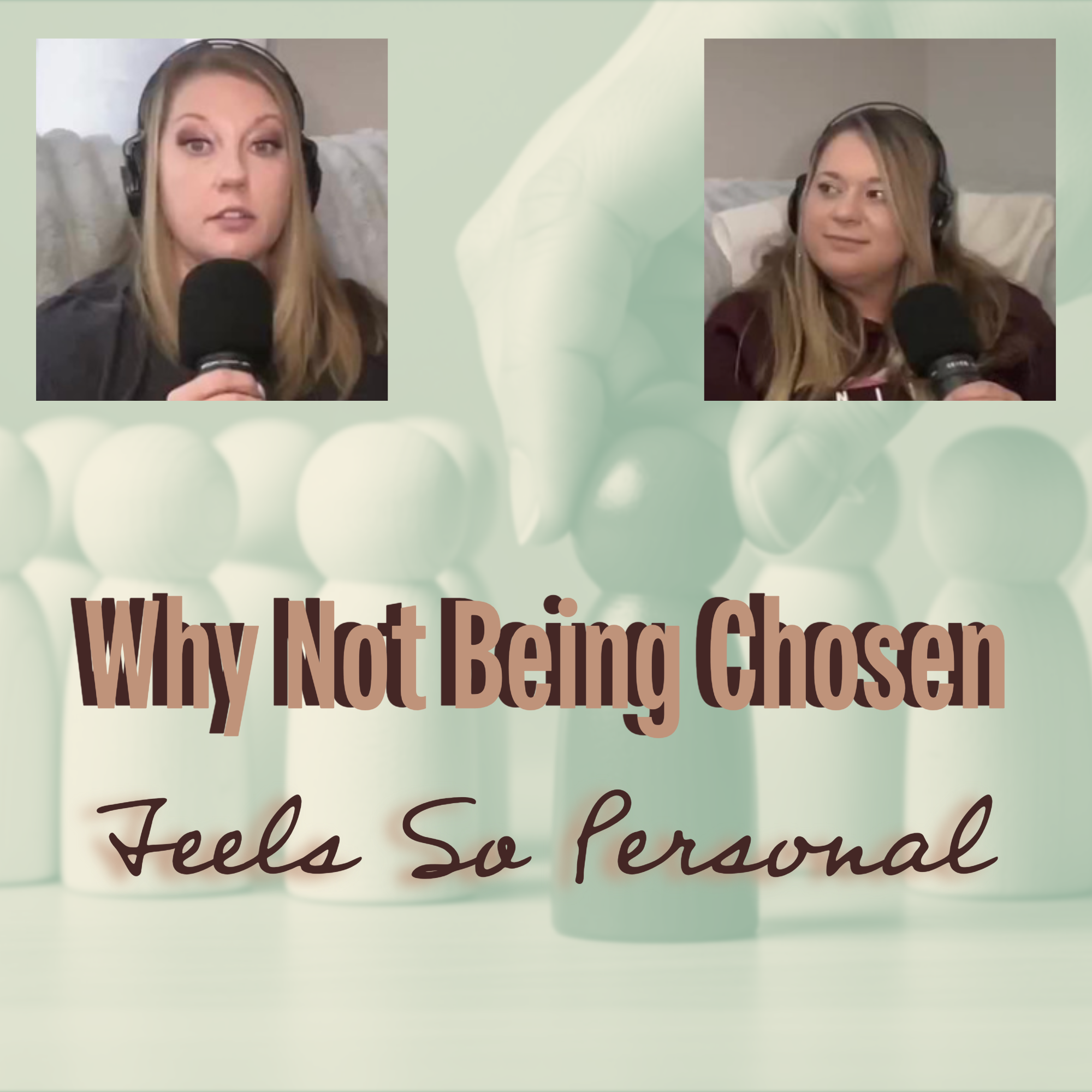
Why not being chosen feels so personal.
[00:00:54] Speaker C: Yeah. So this is like such an interesting topic and it comes up in so many ways for women, not just in relationships, but this idea of not being enough, really being attached to a core belief. But there's a very specific kind of pain in dating when we feel like we're not chosen.
[00:01:16] Speaker A: I don't. Obviously we're going to get into it, but it is hard to understand, like, why that is. Like, you know, immediately you're like, well, why am I not good enough? Like, why am I not worthy? And it's. And we internalize it instead of being pushing it back on them and being like, well, it's obviously something with them. It doesn't necessarily mean it's anything with me.
[00:01:36] Speaker B: And I think a lot of us, like, will do things to, like, make a guy like us more like all of a sudden we pick up these interests that, like, that they're interested in just to like, make it so seem like we're worthy or yeah, likable.
[00:01:51] Speaker A: I did it with motorcycles.
[00:01:52] Speaker B: Yeah.
[00:01:52] Speaker A: And now I can't stand them and get PTSD every time I hear one.
[00:01:55] Speaker C: We feel that as we are, we are not worthy. And so we have to change to make ourselves worthy of this particular participant,
[00:02:07] Speaker A: this particular unfortunate that we feel that way. So what is it about not being chosen that makes us like, why is. Why does that end up being a question for us that it makes us feel like we're not enough?
[00:02:17] Speaker C: Well, some of it is an internal shift to self blame. So common thoughts. And it can be anything along these variations. But like, here are a few. Like, did I do something wrong?
When I hear all the time is, was I too much? Or I ruined this because I did X. I asked to have my needs met and right and they weren't able to meet my needs. And so I was too much. And that ruined the relationship. And so not just therefore I did something wrong, which is like feeling guilt about doing something to end the relationship or cause the relationship to end, but, like, I am something wrong. There is something wrong with me, which. Which hits on not just self blame, but shame. And. And like, in this, we're often taking someone else's inconsistency in terms of what they are offering and what they're throwing out there in the relationship and turn it into a feat about
[00:03:37] Speaker A: why do we. How do we fix this internal shift? Like, this internal. Like, how do we shift it from self blame to, like, that's on them? Like, that's a them issue. Like, I know you and I have worked through this a lot because I also thought, like, what. Because before I knew Amber, I was like, what does she have that I don't have? You know, like, why?
And I'm like, and now, like, now that we're best friends, I'm like, well, we are the same person. So I was like.
[00:04:05] Speaker B: I said that he went for the dollar tree version of Lauren.
[00:04:13] Speaker A: I was like, why are you going
[00:04:14] Speaker B: for the dollar tree version?
[00:04:15] Speaker A: You're so ridiculous. No, I'm like, I get it. Like, I understand, like, why he was attracted to her. Like, now that I'm friends with her and I know her. But at the same time, like, back then, it was like, why am I not enough? And it was like, no, this was never a me issue, it was a him issue.
But they're so good at making you feel like it's a you issue.
[00:04:38] Speaker C: And I think a lot of it comes back to, like, you know, we did an episode a while ago on Red Flags. I don't want to, like, relist and get into all of the red flags, but instead have more of the focus of today's conversation be around the dynamics in the day to day of the relationship. Because that's where the red flags emerge anyways. And a big red flag in relational dynamics are inconsistencies.
So saying one thing but not having your actions align with what you're saying, Saying, I'd love to get together.
You know, I've got these plans going on with family in the morning.
Some friends might be getting together, but like, let's get together for like a drink mid afternoon or something like that. I'd love to see. And then so it's all of a sudden, like, it's mid afternoon and you're not hearing from them.
[00:05:46] Speaker A: Yeah.
[00:05:46] Speaker C: Action.
Are not consistent with what they're putting out there, but we choose to miss it.
[00:05:53] Speaker B: Yeah.
[00:05:54] Speaker A: So there's like, we. The lack of follow through on their end. And then for some reason, it makes us crave it almost makes us crave it more like. Like, give me, like, why aren't you.
What am I doing to not make you actually follow through? Like, you should be following through. And is it something like where we would follow through? So it's hard for us to understand why someone else won't, right? Yes.
[00:06:14] Speaker C: I mean, that is part of it. And some of the times it's like, well, there are parts of the relationship that feel really good, that make me feel really good.
And so I guess I can choose to accept, like, this one instance where they don't follow through, but, like, one instance becomes another and another and they stack up. But they're small instances. And so each time we dismiss them, we kind of let them go.
And we don't realize that we're then caught in this relational pattern where we're accepting inconsistency from a partner as the standard, essentially.
[00:07:04] Speaker A: Like, we know. We know that it's not good for us, but we're getting attached to them. We feel. We already feel attached. We crave their attention and everything else. So then even though we know they're not meeting our standards, we still just, like, deal with it because we are attached to them.
[00:07:19] Speaker C: Right.
There's also something really powerful that happens in the brain with this kind of relational dynamic. And I think that it is not talked about enough.
So.
What feels like chemistry is often our nervous system recognizing something familiar.
So something that might feel good in the moment, like, you go out, you have a really good time, you feel connected to the person, and then you don't hear from them for a couple days. Or their texts are kind of sporadic. Right. But just because something feels familiar doesn't mean that it's something healthy.
However, this feeds what's called our intermittent interval reinforcement loop. And this is really powerful when it's activated. So this is the same part of the brain that lights up in the addiction center of the brain. And so, like, that inconsistent creates craving.
Their unavailability creates desire for increased focus on them and wanting increased focus from them. And that familiarity in terms of connectedness feels comfortable because it feels so good in the moment when we're getting it.
[00:08:56] Speaker A: And then how do you. But like, I think a lot of people would then ask, okay, well then how do you not do that or de. Center it from men and put it on something Else maybe, like, how is that how you do it? Like, I mean, I feel like for me, because I'm in a position where I'm currently, like, I have no desire to date a man or to be with a man romantically, as we know, Lauren has zero desire, zero desire for this. But I feel like I've put my focus on friendships and, like, hobbies and things like that instead. And so, like, I know it's not quite the same as far as, like, a romantic love and a platonic love are not exactly the same. But, you know, is there a way? Is that how you focus on decentering it is by focusing that love on somebody else, even though it's not quite the same?
[00:09:47] Speaker C: Right. And. And so instead of pouring that time and attention into a relationship where I've talked about breadcrumbs before and like, men throwing breadcrumbs in a relationship on the podcast, but instead of like, settling for those breadcrumbs and then pouring into that person making the choice to pour into yourself.
[00:10:13] Speaker A: We're told our entire lives by everyone in society that our job as women is to make men happy.
[00:10:20] Speaker B: Well, and to have children and to get married. And I don't think women realize that there's happiness outside of that.
[00:10:28] Speaker A: And you have choices.
Like, you can choose. Like, I am child free by choice. Me too. And I feel like a lot of people will be like, oh, well, that's selfish, or whatever the case is. But it's like, no, I've actually put thought into this as opposed to a lot of parents who just end up having kids and don't put thought into it.
You know, it's.
We do have choices in this day and age. And my ancestors fought for me to have these choices and these rights. So, like, I'm going to make them proud by actually thinking through my thought process and actually doing what I want to do because I have the ability and the right to do that. Which I think is something that a lot of people, like, struggle with today. Because a lot of people still just.
We put way too much emphasis on romantic relationships.
And if we fail, if we feel like they're not giving us attention or they're not choosing us, then we feel like failures.
[00:11:27] Speaker C: They are. Like, where they have failed the most is if they, like, if their marriage is falling apart and they're contemplating divorce or their significant other is involved in an extramarital affair, it's like, what did I do wrong?
[00:11:49] Speaker A: Society has constantly told us that if men only look outside, if you are not giving them something, I get Told that all the time. Like, on the oh, yeah, comment.
[00:11:59] Speaker B: Like. Like constantly commenting, stating that, yeah, like, what did you do for him?
[00:12:04] Speaker A: Yeah, what did you do for him?
[00:12:06] Speaker C: What.
[00:12:06] Speaker A: What did you not do for him? What made him step out? And, I mean, they immediately assumed that I withheld sex. Because the guys on there will be like, did you say that you had a headache? That you had a stomachache? I'm like, those words never once came out of my mouth, not one time. And I. In fact, I was the one asking him for all of that. And then he would tell me that I was being needy and it was unattractive because he had ED issues and he had his own issues, and because he was insecure, he would twist it on me. But the fact that the men out there just immediately assume that because they.
It has to be a woman's fault.
[00:12:46] Speaker C: Well, and nobody says, oh, did he withhold sex?
[00:12:53] Speaker A: And that's 100% what it was. And. But. But surely not because he's a man.
[00:12:58] Speaker C: Right?
[00:13:00] Speaker B: It's never twisted the other way.
[00:13:02] Speaker A: Like, my. I saw on Instagram the other day that somebody said my needs weren't met either, but I didn't cheat.
And I think that's the perfect thing. Like, yes, our needs weren't met either, but we didn't step out of our marriage because we have morals and integrity. And I loved this person. And part of loving that person is loving them, even through the hard times. Like, nobody questions the men as we just talked about. Like, nobody was asking Dick if he was withholding from me. Like, it's. It's always the women.
So what. What makes that, like, let's talk about identity in that part of it.
[00:13:39] Speaker C: I think it's. Some of what we already just discussed is that as a society, we have this idea that, like, women need to look a certain way if something happens in the relationship, they're not giving something in the bedroom. It also creates this, like, identity for women that women don't enjoy sex. Right. That men always.
[00:14:05] Speaker A: Also, if we say we enjoy sex and we're whores.
[00:14:07] Speaker B: Oh, yeah, 100.
[00:14:09] Speaker A: And that's like, another thing that comes in with it, like a story we just recorded. That's what was happening with her.
She was called a. By him because she was 48 years old and had only had seven sexual partners. Seven. That's it. And he called her a. Yeah. And I'm like, I looked at. I looked over at Amber and I was like, well, I guess we're whores. Oops. Like, they want us to be Virgins, but experienced, but also give it to them whenever they want, but then they don't have to do the same. It's not reciprocated. It's a one way street.
And that's a weird thing society has put on all of us.
[00:14:50] Speaker C: And so that's where it comes back to like this idea of being chosen can feel and does feel like validation, not just connection. We tend to make it about like connection. Like I've never met somebody where I have felt disconnected to them before and the chemistry is just off the charts. But it might not actually be about connection there. It may be more about like how they're validating you, particularly in the beginning of a relationship when you're dating. And then we fall into this trap of trying to earn love.
[00:15:33] Speaker A: It's deep. That is a deep trap. It is because you do, you constantly feel like you have to earn, earn it.
And as women we are constantly like, like we already discussed adjusting ourselves, adjusting our hobbies to them, you know, like waking up early and getting, making them breakfast. And like we do honestly, we do
[00:15:54] Speaker B: too much, Way too much, way too much.
[00:15:57] Speaker C: And the mental load for women is also a real thing that I know. Like the women out there listening will resonate with it, but it is so often dismissed by men. No, men can't understand it because they don't carry that mental load keeping their
[00:16:20] Speaker A: calendar or appointments or all of that. Like not even, like literally like, and not even for kids, right? Like I can't even imagine the women that are mothers that also have to do the mental load on top of that. But like I was in charge of his entire life because he was irresponsible and didn't know how to keep up with when he had appointments. He missed them all the time. If I didn't, even if I told him that morning that he had an appointment, I would have to make sure like 30 minutes before the appointment that I got ahold of him to go to the appointment. Because if I didn't, he would miss it. And they constantly say things like, we don't want a mom. I'm like, yes, you do. Yes you do. You want somebody to cook you meals, you want somebody to pack your lunches, you want somebody to keep up with your calendar. You 100% want a mommy.
And that's the problem.
And. But we're the ones that are in the trap. We're the ones that are overanalyzing everything that we do.
[00:17:13] Speaker C: Right? Right. Because we are constantly scanning for what we did wrong.
Because that core belief is still so deeply tied to shame for us that it's like we continuously question, why am I not enough? And then the moment that we start accepting someone's inconsistency and then trying to earn it, earn their attention as a form of consistency, that's when we start to abandon ourselves. That's the beginning of this trap of owning.
[00:17:55] Speaker A: They abandon, like, who they are for this person, and their identity almost becomes that being with that person and being for that person. So then when we aren't feeling chosen by that person, we spiral and we go into this depression or, you know, even getting suicidal tendencies and thoughts because we feel like we're not enough. Because at one point we were, or they made us feel like we were.
And then now, all of a sudden, we're not. And so what changed? What did I do? You know, do I need to try harder? Do I need to go into trying even harder for them and giving them, you know, what more can I give them? What more can I do for them? And I think a lot of women, too, you know, from another story that we had, was that she.
She took him back. He explained he was cheating, um, and they weren't married yet, but they had been together for, like, a year, and he was cheating and stuff. And she woke up early and got his meals ready for the day and everything else, even though she didn't have to be up that early.
And he explained everything away and she. And she took him back, and then it just continued to get nasty. And, you know, he was really, really rude and mean and said, like, horrible things to her. And she was feeling suicidal because she was like, I thought I found my person. I thought I found my love.
And again, I think we just invest this much time, like, a lot of times these men. And I'm not saying men don't end up feeling the same way. Like, they're. I'm sure there are good men out there who have been used by a woman and. And felt the same way that these women are feeling. But on what we see and what, you know, we're constantly being told in our stories is these women, you know, end up feeling worthless.
And how do we change that mindset? Like, is it right?
We feel broken, we feel worthless. So how do we get ourselves to a position where we won't ever put ourselves in that position again? How do we stop ourselves from continuing this cycle with the next partner or fixing it for ourselves for the current partner, which then the current partner may not end up working out because the current partner doesn't Want you to feel that way.
[00:19:58] Speaker C: I think that's a really important question, and I don't want to give, like, an oversimplified answer, but I think, like, it's about cheating, choosing ourselves instead of waiting.
Right. Because when we are responding to inconsistencies, when we're caught in that intermittent interval loop and seeking that reinforcement, it's very hard to. To get out of that. That's the moment that we.
[00:20:35] Speaker A: How does one either prevent themselves for it or. Or recognize it and try to, like, pull back from that? Therapy.
[00:20:42] Speaker C: Therapy. You know, I'm on boundaries. Boundaries are a big thing. And it in like that, in that statement I made, making the choice not to wait for them, but to choose you, that in itself is setting a boundary. Lauren, you choosing not to date right now is setting a boundary. Even if it's not a boundary with a specific person, it's drawing a boundary for yourself.
[00:21:15] Speaker A: That's true.
[00:21:16] Speaker B: Yeah.
[00:21:18] Speaker C: And often don't think about boundaries in that way. Like, a lot of times we're like, oh, I gotta. I gotta send. Touch this boundary with. With a friend, with a partner, with a parent, whomever. But the most important boundaries that we can draw are the boundaries with ourselves.
And while they're the most important boundaries that we draw, they're often the boundaries that we tend to cross the most.
[00:21:45] Speaker B: Yeah.
[00:21:46] Speaker A: We're like, well, this time.
[00:21:47] Speaker B: This time is fine. Next time we'll stop it.
[00:21:51] Speaker A: Yeah. He apologized. He said he's sorry.
[00:21:57] Speaker B: Yeah.
[00:21:58] Speaker A: And then it happens again.
[00:22:01] Speaker C: It won't happen again. We went out for dinner, we went on vacation, and we had a great time.
But then he didn't take out the
[00:22:12] Speaker A: trash, but he was sorry again. Yeah, we do. We do move that line for ourselves. And I think a way going forward that I look at it is would I want my friends that I love to do that? Would I be okay with my friends doing that for their own boundaries in their own relationships? Like, I don't want my friends treated like that. So if I don't want my friends treated like that, why would I want myself treated like that? Because I think that's a lot of times we. We care more about our friends and people that we love in our family, in our like lives than we do ourselves sometimes. And so we need to learn to self love more.
[00:22:49] Speaker C: I think that's a really important point that you're speaking to, is a lot of times we have less tolerance for injustice towards other people.
[00:23:02] Speaker A: We're willing to put up with it for ourselves, but not for other people.
[00:23:04] Speaker C: And that's where we need to look at our boundaries.
[00:23:08] Speaker A: It's hard to work on that by yourself. Like, it. Honestly, it just is so. Which is why we have you on here to, like, promote going to therapy and, like, working through your own stuff. Because without that, without those tool. It's a tool to help you work through something. But there's that boundaries book.
It's literally just called Boundaries, but it's by Henry Cloud.
When to say yes and how to say no to take control of your life.
So people can listen to self help books all day. And they're. They're, again, they are another tool. But for me personally, I found success in working on myself with you.
And Amber has her own therapist that she works with. And I think that that is something that a lot of people, you know, we got to get out of. This stigma of therapy being for weak people. No, it's for people who are strong enough to be like, hey, I don't want to live like this anymore, and how can I make my mind stronger? Because if we work out our bodies, why aren't we working out our minds
[00:24:11] Speaker C: that we could talk to on a consistent basis, whether it's weekly or every other week, whatever. Like, your scheduling is, right? Like, there's so many reasons for that too. We, in talking to somebody, we externalize what is in our head. And sometimes it's like when we have these conversations and say it out loud, it's like, oh, my gosh, this, like, why was I, like, ruminating on this in my head? Because it sounds crazy when I say it,
[00:24:43] Speaker B: right?
[00:24:43] Speaker C: And then there's like, the validation, right? Because going back to the overanalyzing piece that we talked about with the white, I'm not being chosen. We need somebody to validate our experience, but also hold up the mirror and be like, wait a minute, why do you feel like you're not doing enough?
[00:25:04] Speaker A: And also for me, I don't want to trauma dump on my friends constantly. I Like, that's what friends are for. But at the same time, like, sometimes I just need to vent, like, again over something or, like, if Dick comes back into up in my life for whatever reason. Like, I don't know, I got a phone call from Harley looking for the bike, you know, and so it just comes up. And then I'm like, okay, I have an appointment with Suzanne in a couple days. So I'm gonna. This is one of the things I'm gonna talk about because I need to vent about it and get it off my chest. And, you know, after a While, like, your friends don't want to keep hearing you say the same thing over and over and over and over again, it's gonna wear them out.
And you don't want. I don't want to abuse my friendships.
[00:25:48] Speaker B: Right.
[00:25:49] Speaker A: So that's another reason why therapy is so important, is to be able to have that third party to get everything out.
[00:25:55] Speaker B: But also, sometimes we're just not comfortable enough, even with our closest friends, to. To share some of the things that are going on in our life.
[00:26:02] Speaker A: It's true. Especially if it's like, something traumatic and like. Like violence and other things that happen in. In your life, it's. You don't want to share those things.
[00:26:11] Speaker C: I can speak from personal experience to what, like, both of you are saying. As a therapist myself, I have several friends who are therapists, work in the field, but they're not my therapists. Right. I'm not their therapist. And there'll be times where if one good friend would go over dinner, like, quite a bit, and, like, there's been conversations where I'll be like, telling her something, and she'll be like, this is what I think. But she's like, right, you need to go talk about this elsewhere, because I can't be objective because I'm your friend.
[00:26:46] Speaker A: What is the conclusion as to why we take it so personal to not be chosen?
[00:26:51] Speaker C: That's a great question. I think it ultimately comes back to core beliefs and how those core beliefs impact our boundaries with ourselves. So we're not enough. We're broken, we're unlovable.
And when we feel pulled towards someone who can't fully choose us, it triggers those beliefs. And this is a system that we have learned about love. It often dates back to early attachment patterns. Like, if we had a lot of inconsistency in terms of how we receive love and affection from our parents, we're taught to.
Taught that, like, accepting inconsistencies is how people express love. And so we continue with that pattern.
And so to work on breaking that and draw that boundary with ourselves, we have to recognize that the goal isn't just to be chosen by somebody. It's not that the goal is not to be chosen at all. It's just stop trying to convince someone that they need to choose.
[00:28:07] Speaker A: You have to do the work to be able to. To get to that point. I think in your life is, you know, learn how to do that, because it's something you have to, especially if you've been. That's how you accepted love your whole life. You have to unlearn how to accept that. Like, that's not acceptable behavior. We cannot accept inconsistencies. So we have to unlearn accepting that
[00:28:30] Speaker C: behavior and learn to catch ourselves when we're in the pattern of accepting inconsistencies.
[00:28:36] Speaker A: Tool for doing that is going to therapy.
[00:28:41] Speaker C: I would say therapy pouring into yourself, right? Like that self love piece, which also includes going to therapy. But, like, a lot of what you've done with your life, Lauren, over the last year of, like, expanding yourself into other areas so it's. You're not waiting to be chosen by somebody and then thinking about, like, are my boundaries aligned with taking care of me?
[00:29:08] Speaker A: A lot of people, you know, I've been. I've been talking with a friend who's going through some stuff, and, you know, my number one thing to her always is, you need to go to therapy. But she's like, I can't fit in. I don't have time. So she always makes excuses for it. And I'm like, okay. But I'm like, why? You know, she feels lonely. And I think that's a lot of thing a lot of women get into is that they feel alone. And my thing is, is I'm like, I don't feel alone. So it's hard for me to. To understand that because I'm like, what? No, I have my cats, but I also have my friends. And I, like you said, I did a lot of work this past year expanding my friend group. So, like, me reaching out to Amber and getting a hold of her, and then we became best friends. But now not only do I have her, I have her family, like, to the point that I'm going to. And staying with, like, one of her relatives in Montana without her.
And you know what I mean? Like, it's. You work on expanding your group. And then through her, like, she's met through me, some of my friends, and so then we family.
[00:30:08] Speaker B: And her mom is my mom now.
[00:30:10] Speaker A: Yeah, my mom. My mom and her were. She was cold at the restaurant the other day, so they were like, cuddled in the corner together because they were both cold. So. And you just. You build that out and you find your people. And I think a lot of people are scared to do that because they're told, okay, well, you're in your late 30s. You shouldn't be looking for female friends. You should be looking for a man. And it's like, well, no, I'm looking for people who make my life richer.
[00:30:33] Speaker C: And by choosing that, if the goal is to find a partner, the a more fitted partner for you is going to emerge, but maybe not on, like, the timeline that you.
[00:30:51] Speaker A: Right.
[00:30:52] Speaker C: Like, if you're looking for it right away. And that's probably not gonna happen on that timeline, but it's worth waiting it out.
[00:30:58] Speaker A: So if you're constantly putting out the. I, I need this. I need this. I need a man. I need a man. I need a man. The men that are going to come to you aren't the men you want.
They're gonna be the ones that use you, abuse you, the narcissist, because they. They cling, like, to that.
And even somebody like me, who I don't think I was necessarily putting out that energy, but I hadn't dated in six years. And whenever I finally started dating and I met Dick, he, I think latched on to the fact that I was like, oh, my God, this feels good. And I haven't felt this in a long time. So I got excited. And he could tell that I was excited, right. And, like, was like, let me draw her in more and knew what to do to get me in more. And when you. When you give in to that and the whole, like, I feel special thing, you. You do, you start to lose yourself real quick. So I think. But I had no friends. I had no community here.
Now I do. And I think that if I was ever gonna date again, it would be a completely different experience going back into it because I wouldn't tolerate half the stuff. So moral of this story is, ladies, that we don't need to take this personally. It's a them issue, not an us issue.
Them not choosing us has nothing to do with us. It has everything to do with them.
[00:32:25] Speaker B: Absolutely.
[00:32:26] Speaker A: So do not abandon yourself and learn to love yourself fully.
Because if you want to draw that energy in, if you love yourself fully, then you want to draw in somebody else who can also truly love you fully, whether it's friends or significant other. Well, thank you, Suzanne, for coming on.
[00:32:45] Speaker B: Thank you.
[00:32:46] Speaker A: I think this was a great episode and we will see you guys next week.
This episode is proudly brought to you by the law firm Ryan and Rouse. If you or a loved one have been injured or need legal help for changing family circumstances, contact the personal injury and family law attorneys at Ryan and rouse today at 256-801-1000 or visit them online at www.alabamalaw.com. when your future is on the line, don't go at it alone.