Episode Transcript
[00:00:00] Speaker A: Welcome back to Spill the Tea Unfiltered. Hey, guys.
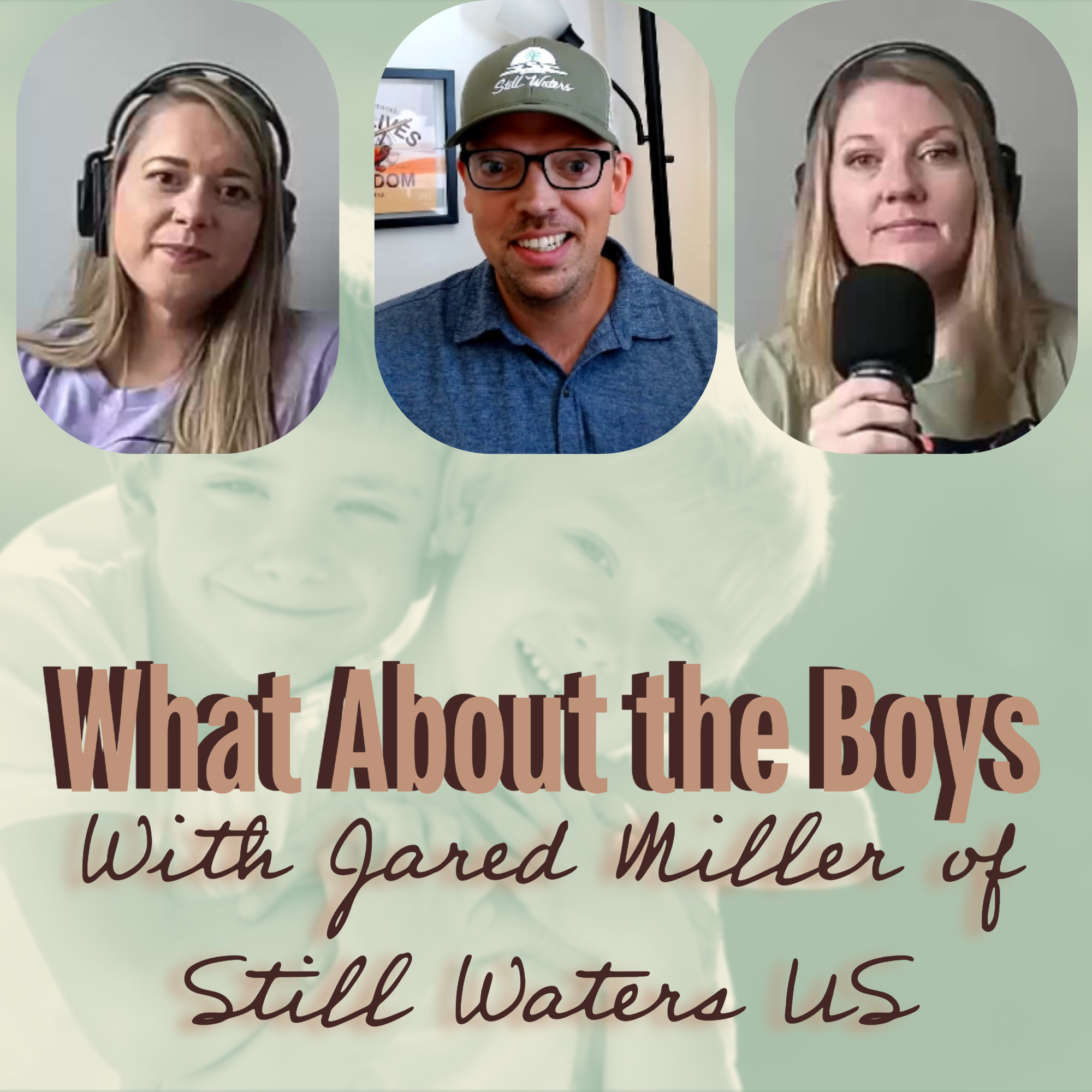
All right. And today we have Jared Miller with us. He is the founder and CEO of Stillwaters.
And I'm going to let him explain what all that means.
[00:00:14] Speaker B: Awesome. Yes. Thank you so much for having me. I'm excited to be here today. It's a lot of fun. Yeah. So Stillwaters, it's. It's officially labeled Stillwaters US but we call it Still Waters for short. But it is an organization that is completely dedicated to supporting boys and men, male survivors of human trafficking throughout the United States. The goal is to open up a residential facility so that we can actually house boys and men and give them an opportunity for transitioning out of exploitation and into society.
[00:00:45] Speaker A: That's amazing. And are you going to be the only one or are you the, like, second one? There's only, there's very few for boys.
[00:00:51] Speaker B: So right now in the United States, there's actually one residential facility open, and it's in Dallas, Texas. Great organization at Bob's House of Hope. I don't mind shouting it out because they do great work. We're glad they're here. So one organization currently open, there's one coming up in South Alabama soon. It's going to be called Samuel's Place. And so they will be opening up right now near, in the near future. But other than that, there's no other residential facility that exists. And really there's only one or one or two outreach organizations that I know of in the country that serve boys and men. There's lots of groups, I would say, that are, I mean, there are many anti trafficking groups would tell you that they're open to serving boys and men. Just like anyone in law enforcement would say, yeah, I would, I would happily serve, you know, a victim who's male coming out of their situation. But the problem is where do they go?
[00:01:44] Speaker A: Right.
[00:01:44] Speaker B: What resources do we actually have? And really what we see from, from a male survivor's perspective or in their situation, a male victim's perspective, is I'm not even. Why am I going to try to get out of my situation when there's no place for me to go? You're just going to put me into a homeless shelter or a rehab and then I'm going to be right back on the street.
[00:02:05] Speaker A: Right. And I, I think that's what. When I saw you speak at a conference, I was like, this is a really good thing. Because when you think most people, when they think about trafficking, especially sex trafficking, they immediately think women and girls but in fact, boys actually are going up, I believe like ticking up in an upward incline for trafficking. And I think that it's important that if you can get them young enough and hopefully give them the help that they need, then that can change the trajectory of their life and the path that they end up taking.
So what are the.
What is. So at Stillwaters you're going to have housing, like what else? What's. What all is the plan as far as like what's there.
[00:02:50] Speaker B: Yeah, I want to affirm what you just said that you know, I believe, I believe very strongly that if we invest in the lives of boys who have experienced adverse childhood experiences or who have endured adverse childhood experiences, I believe that we'll see a reduction in generational cycles of abuse. And it goes off of this theory that in general most people agree that probably most of the perpetrators are men of sexual, especially of sexual crime.
Um, and we, we agree that probably the majority of victims are women and we, but we also tend to agree that probably the majority of perpetrators have experienced some sort of abuse.
[00:03:27] Speaker A: Right.
[00:03:27] Speaker B: And those things aren't always, that's not causation every single time. But there is a correlation there. Right. And so the theory that Still Waters is based off of is if we're going to say that we're actually combating human trafficking, prevention work is great outreach and education and awareness. We have got to do that. But unless we're actually trying to intervene into that, into the lives of, of the people who have endured trauma and might go on to perpetuate that cycle, I don't, I don't know that we really have a business of saying that we're countering human trafficking. Like I think that we are missing a big component that really could reduce generational cycles of abuse. So our goal is to provide individualized restorative care, holistic care that. So, so we're going to have an incredible team of clinical counselors and therapists and, and, and caseworkers who in, you know, upon intake are going to be assessing and pastoral care. I can't leave that out. We're going to be having wraparound services that intake survivors and assess with, along with the survivor, like what are the needs that you have and what, and, and so when I say that, what I mean is like 167 acre property with 59 bedrooms on there. We have a lot of places where we can put people.
Maybe there are survivors who don't need to be living necessarily with another survivor. You know what I mean? We have the space to be able to give you individualized care. Maybe you are a survivor who does not yet need to be in public school.
We want to have homeschooling available on campus. But if you're, if you're someone who it is best for you to really start reintegrating into a school system or into private school, into that more external social environment, we want to be able to provide that for you. So we're looking through the lens of how can we meet the actual needs of the survivor, survivor themselves for the long term. We're not interested in just being a one or two year long program, which those are necessary. I do not mean to diminish those at all, but we're serving minors under the age of 18 and we're starting out with 5 to 18 years old.
I believe that we will probably be serving, you know, quite a few survivors for many, many years because, because it's entirely possible and probable that their family was part of the exploitation, you know, or part of the problem. So survivors don't always have, especially minors don't always have a safe family to go back to. And so we, we're actually building the infrastructure of still waters to be long term sustainable for the survivor where we're, we are your community. Um, and we, we obviously want the end goal, if possible to be safe reintegration into the family and, and then also safe reintegration into society. That's absolutely the end goal. But what we're saying is we're going to be a foundational community for you to, where we will support you through your, your recovery, your restoration journey and we will help you reintegrate to society as a wholehearted citizen. But we'll all, we'll be here for you.
[00:06:29] Speaker A: Yeah. One question that pops in my mind is for someone, for a child, let's say five years old and they, and it was, let's say the father that was trafficking them. Because we do know that that happens a lot.
[00:06:43] Speaker B: Right.
[00:06:43] Speaker A: How do we, or how do you, like, does the court agree to let them stay with you? Like, how does that work? Is it like almost like a foster situation?
[00:06:52] Speaker B: So that's a, it's a wonderful question. It's a question that I'm getting asked a lot like where are we going to receive people from? So one, we will receive them from child protective services for, for sure like that. I mean, because if you're, you know, a minor involved in a crime, you're going to be probably related to state custody somehow, you know, throughout, throughout this process. So we'll probably have quite a few from state custody. We'll probably have a few from child protective services. And especially if it's a family member that was doing the exploitation, they're likely going to be a ward of the state. And so we would, we would have a relationship as, as such with the state to where we are able to be the foster, you know, family. That would be the goal for that. But, but I can also see us absolutely taking in private placements because there could be a safe family whose child has undergone these things and they are not equipped to handle the comorbidities of that for, for a period of time.
[00:07:52] Speaker A: Yeah.
[00:07:53] Speaker B: And so what we will also be equipped to do is that family, you know, family therapy, family reintegration, the. Let's help, let's help teach you how to handle and how to, how to support your child in a safe environment. Let's make sure that we can get this child to a place of stabilization so that they can go back and reintegrate with you. So we'll take both for sure. The cool thing is the facility that we're looking at right now is actually already licensed by the state for child for a foster care and residential facility. So really all we have to do is buy it and move in.
[00:08:25] Speaker A: Yeah, well, that's right.
And that's the goal right now. Right. Is, is the, we're in the fundraising part of this. Right. So you got, you have the plan, you have everything, you have the property that you're looking at. And it's in Tennessee, correct?
[00:08:39] Speaker B: That's exactly right. Yep. It's in Tennessee in the middle of nowhere on purpose. And I say that so middle of nowhere, but also very close to, close enough to a medium size city to where there's plenty of resources, but it's not so close to, you know, the nearest sketchy back alley, you know, or whatever. Like, you know, you, you have some woods in the way and a lake or two. Yeah.
[00:09:07] Speaker A: And I mean, honestly, nature's healing.
[00:09:09] Speaker B: Absolutely, absolutely.
So it's in a good, it's in a good environment. But yeah, it's 167 acres, 59 bedrooms, several different actual like property housing units itself.
Plenty spread out with the ability to develop even more. So it is that initial investment we're hoping to raise $5 million to be able to purchase this property.
[00:09:31] Speaker A: Yeah. That's awesome. Now, is there any government funding that does help y' all support this? Because it does seem like something that like the government should step in and help with.
[00:09:41] Speaker B: Yeah. So lovely question. And I, you know, I would, I would agree.
I think, I think also especially you know, the state of, not just the state of Tennessee, but I think other states should also be excited about what's going on in the state of Tennessee and be supportive of that because, because the reality is that we will be receiving a lot of kids from other states to get them out of their environment to be in a safe place.
And so we might not actually receive.
It's, we might not have all, like all of our kids in our, in our facility may not be necessarily from the state of Tennessee. They'll be from all over.
Because as we know in this work, if you are trafficked in Nashville, you probably shouldn't be in a house in Nashville. You probably should have separation and some distance. Yeah. So we're, we're looking to have it in the state of Tennessee. We're working, looking to serve kids from all over the country. So that means we will be working with a lot of entities from around, around the way. But state funding and government funding and big grants in general, including major corporate grants require typically a certain amount of length of time that your ein existed.
And often it's three to five years minimum typically for big grants.
And so you run into this chicken and an egg situation where it's like, well, if this, if this solution hasn't existed before and it's desperately needed, how can it be three years old to get to that benchmark, you know, if it's a new solution? And so what I'm, my message is, you know, if you are someone who knows of or has the responsibility of grants that could be reallocated to be for the initial startup of this organization, that would be what we're looking for right now. So the, the truth about the fundraising aspect of all this is that we're not really spending a lot of time stressed, stressed or focused on the major grants, but because those are hard to, hard to achieve typically as the, the time amount behind them and there's a lot of reporting that's done. So really this is grassroots fundraising. It's people who run their own foundation or people who have their own. Yeah. Their own financial well being to where they can be generous. I mean we're looking at people who have the ability. And the truth is $5 million is a check to someone, you know, to a lot of people actually.
[00:12:08] Speaker A: Yeah.
[00:12:08] Speaker B: Yep. And it is a tax write off too by the way. You know, and you can use DAF Donor Advice Fund and you can use crypto like we, we, we can make it work like there's There's a way here. So I hope that the state will be interested. You know, right now, I, I, this is not a political conversation, or am I trying to make it be? We're in the middle of the midterms right now, and so there's transition happening in the state of Tennessee. Who's going to be the next governor? What does the agenda look like? And tragically, so much of funding for initiatives, you know, gets tied to administrations and agendas and stuff like that. So there's also this reality here where we have to see what happens in the next few months and keep knocking on the right doors and keep trying to get the right meetings, but just be consistent, because the truth is, this is a human life problem, you know?
[00:13:00] Speaker A: Right. And it's a big deal. It's bipartisan or it should be, not just nonpartisan.
[00:13:05] Speaker B: It's.
[00:13:05] Speaker A: Yeah, yeah, it's, it is, it should not matter what side of the aisle that you're on.
You should want to save children right, from these situations and from being, you know, trafficked and everything. So, unfortunately, yeah, that's not, that's not great. I'm glad that you guys are relying on the government because they're not very reliable.
So getting the money elsewhere would be ideal. It'd be great if the government could. But getting it elsewhere obviously seems to be the right one. So you guys are a nonprofit then?
[00:13:36] Speaker B: Yes. 501C3. Nonprofit, perfect, exempt, all the things. And, you know, I will say states have surpluses every once in a while at the end of the budget, and we may or may not be in a surplus right now, and there are discretionary funds that are available, you know,
[00:13:51] Speaker A: and they always want to spend it. So I'm like, somewhere good right there.
[00:13:58] Speaker B: Yeah, I'm just doing a little shout out for the, for the excess that we have this year. Yeah, exactly.
[00:14:05] Speaker A: What is all about the facilities and everything. And it all sounds amazing. Can we get into, like, trafficking and. Because I think that's the thing, is a lot of people don't understand, one, that it even affects boys. Two, how and who and why and all the things like, you know, all that. Like, can we get into the actual statistics of, like, what actually happens to boys?
[00:14:26] Speaker B: Yeah, 100%. So, you know, so the, the concept of Stillwaters.
Well, really, the concept of, for me, about what about the boys has really came up almost as quickly as I got into counter human trafficking in 2018. So I started working with organizations internationally to consult on their business practices. But immediately I was like, I'm going to the red light districts in Bangkok and I see the whole male section of these red light districts.
What are we doing about them?
And the answer was always, oh, you know, some. I think there's a church that does outreach to them.
And so, so I saw this immediately. I saw this problem along with the problem of how are we getting people to where they need to go. So transportation. And what about the men?
The male survivors came at the same time. Those are the two gaps in counter human trafficking that I saw. So we spent some time solving the transportation problem. And here we are now on the what about the boys problem.
And the sad thing is that in 2018, 2019, as an, as a movement, we still weren't collectively asking that question.
And people were pretty, still resistant to.
It's not that big of an issue. So we're not. We'll get to that later or it doesn't happen as much as you think it does. And then the very sad thing that I hear still all the time, and I'm just gonna, yeah, I'm gonna put it like bluntly and concisely to the comment that I hear a lot is that's just a gay problem.
Like, I actually hear that phrase, that's just a gay problem.
And in their minds, they just said to me, well, if we solve a gay problem, then we won't have male trafficking.
[00:16:06] Speaker A: Which is insane. Literally insane.
Literal insanity.
[00:16:11] Speaker B: I hear that so frequently when I talk about what I am working on, even from the beginning of all this, this vision and all that kind of stuff. I was asked it just last week in a, in a better way. The person asked, ask me something like, do you, do you think that bias towards homosexuality is fueling this problem? And the thing is, though, it's almost always someone who's outside of this movement, or sometimes people in this movement, when they think about male victimization, they almost always think that it has. There's this direct causation again with homosexuality. And it's like that baffles me, but I also understand where people are coming from. I don't agree with their logic and their, you know, their. Especially the bias that comes with that. But I understand this is what I understand is that the conversation hasn't been conducted well, period. So now we're here to start having a better conversation about what is actually happening. So you ask, what are the stats? What is this looking like? First, there's a really interesting trend that happened between 2019 and 2022. And as we all know, a big major event happened during that Time, which was Covid.
So between 2019 to 2022, globally, there was a 25% increase in trafficking victims detected around the world, just in general, across the board. So we started seeing more post Covid than we did before. And I have a few theories on that one. I think the desperation that happened during COVID drew more cases. I actually do believe that. My other theory, though, is that we also had other things, like certain movies come out that gave more awareness. We also had just. The movement kind of got more, even more public than it maybe ever had before. So I think we started seeing. And you could speak into this more, too. Like, I think we started seeing more law enforcement mandates to investigate cases. So then what we started seeing, so we had this 25% increase up until 2022 for all cases.
Then it really was about, I would say, the years 22 to 24 that I started noticing around the country, more law enforcement mandates to investigate or allow ability to investigate male exploitation. Simultaneously, more people in this movement saying, what about the boys?
But we still didn't have solutions for that. So we were doing these investigations with no place to put them. And so what we have seen, there's a federal study in 2023 that said that 42% of all human trafficking cases are adult female, 23% of all human trafficking cases are Adult Male, 17% are Minor Male, and 16% are Minor Female. So this is a federal study that's saying this, that math, first of all, it's missing 2%. And the 2% in the study said 2% of the study does not account for age or gender for whatever reason. You know, that wasn't. That wasn't in the data, the paperwork, whatever.
So the big piece of this math that I think is very important to add up is that that means that male victimization is about 40% according to this study. But it does match other studies that are now saying that minor male victimization, specifically for sex trafficking, is about 30 to 50% of cases involve minor boys.
And so we are seeing that these data trends are occurring, and we're seeing these averages that we're probably getting closer to 50% than we ever have wanted to believe in labor trafficking. And I don't think people will be surprised by this. But in labor trafficking, we're seeing that male victimization is about 57% of cases across the country. So we're seeing these upward trends. We're seeing that it is a problem. Like, it's definitively a problem. We can't, even if it was 1% it would still be some people out there who have nowhere to go.
[00:20:21] Speaker A: Right. But it's a big percentage.
[00:20:23] Speaker B: It's a big percent. Yeah. I mean, I'm not gonna, you know, it. It's big and it's. And it's bad.
And we still are scratching our head being like, how do we. How do we solve this? How do we work with this? How do we. How do we deal with this? We're not doing anything about it. So there are people across this country who are going every day without hope and hope for freedom or restoration. They're going without hope because they do not believe that anyone cares or anyone sees them.
[00:20:52] Speaker A: Yeah, we're gonna throw in right now a trigger warning because we're gonna get a little deeper because I have a question about boys that are trafficked, something that you talked about at Fortify. So if you are not comfortable hearing about young children that are sexually abused, assaulted, and trafficked, then now's your chance to skip through to the end.
So can you talk about the boy groups?
[00:21:16] Speaker B: Yes. All right. So it is just astounding to me what we discover when we start looking at actual case studies. You know, and. And the thing is, a lot of people don't want to look at these case studies. They don't want to hear this information for a lot of reasons.
[00:21:31] Speaker A: It's not nice. It's not beautiful.
It's not. But you can't ignore it, because if you ignore it, it doesn't go away.
[00:21:38] Speaker B: That's right. And. And it is true. Like it is triggering and sometimes in a really harmful way to people. There's a reason why we do this disclaimer, too, because there a reality where people are listening to these things and they've had experiences.
[00:21:49] Speaker A: Yep.
[00:21:49] Speaker B: And it hurts and it's painful and you relive them and. And so I understand.
But there are actual associations that are for the entire purpose of man boy love. There's one called the North American Man Boy Love association, for example. And I mean, there are. And so. So, you know.
Well, we'll come back to the other part of that conversation that we kind of touched on earlier, but we have actual groups that are dedicated to boy swap events where typically the father or a male.
A male caregiver of some sort comes in and exchanges their son for someone else's son so that they can swap and have relations with them and have sex with them and exploit them.
And typically an exchange of currency might be like. Might be involved in this as well. I mean, there's payment that's that's incorporated on all this and. And sometimes not. But the fact is, these are actual, like, established events, established associations that people are a part of across North America and, I'm sure, other places of the world. And so we see male survivors, and especially male survivors who are now adults who have come out of all that maybe 50 years later, finally willing to speak about that thing that happened to them and that they were a part of and that they were drawn into and dragged into and exploited through 50 years ago. But the. The resistance that they face is a lack of belief, because what I just said was unbelievable that these things exist,
[00:23:44] Speaker A: that a father would be like, I'll trade you my kid for your kid, and we can go do sexual things to these kids.
[00:23:50] Speaker B: Yes.
[00:23:50] Speaker A: And then take them back home like nothing happened.
[00:23:53] Speaker B: Like nothing happened. And. And so one of the cases that I said, though, at the event, it was a situation where a.
A boy in a neighborhood had been exploited by his parents, got into state custody, but then ended up getting placed with an elderly couple that was kind of in that neighborhood or associated. Associated in that area somehow. So he got. He got placed with this couple that knew him, an elderly couple that knew him. They ended up exchanging him for their grandson who had been exchanged in one of these systems.
So the re. Exploitation so that they could get their son back or grandson back.
And it. And then the cycle goes on, and it's. It's disgusting and it's horrifying, and it's.
And it's happening, though. And my statement that I want everyone to hear very clearly is I do not care if that was only just one case ever.
We have got to do something about that, and we have got to do something about that. If that was one life and only one life that ever happened to which I did not believe that's the case, I think happens. We have infinitely more people than what we can calculate. I. We have got to do something about that.
[00:25:04] Speaker A: 100%. I think that that's an issue is there are people who are like, oh, well, that's like, one time. I'm like, absolutely not.
[00:25:10] Speaker B: Absolutely not.
[00:25:10] Speaker A: It is not one time. And you got to think, like, all the.
There's been organizations through the years that have had issues, Boy Scouts, like, you know, Little League, all kinds of stuff that have had these issues throughout the years. And so these groups have always existed, but now they're, like, trying to make themselves popular and stuff. And I think. Do you think a lot of it, when it ties into the LGBTQ community, that people. The reason People say that is because there is the group of people attracted minors, per se, like, group, you know, that stupid group are trying to be part of the lgbtq. Like, they're trying to get added to it. So I think that that may also be part of it, is because people are like, oh, well, they're trying to be part of lgbtq, but everyone I know in that community wants nothing to do with them.
They're like, get out of this community. And I think, too, they're like, immediately, oh, if a father's trading a son for another boy, then he's gay.
[00:26:06] Speaker B: Right.
[00:26:07] Speaker A: And I'm like, they don't understand that it's about control.
[00:26:10] Speaker B: Right. Amen.
[00:26:12] Speaker A: They don't understand what the true psyche of a lot of it has to do with. And I think that that is a big problem.
And we had a. I listened to a speaker recently. He was a survivor, 10 years old, and it was his Little League coach.
And one of the things that was interesting hearing him talk was that his Little League coach, obviously he did it to six other boys. It was not just him. It's never just one.
It was always others.
And he groomed the parents, right?
[00:26:48] Speaker B: Two.
[00:26:48] Speaker A: And I think that was an interesting way to talk about it. He was that my parents were poor.
So when you have someone who comes in and acts like they're going to give you rides to practice, they're going to buy you things, they're going to buy you the equipment that you need. It's not that it's always nefarious, but those are things you need to check out and pay close attention to, because that's what they were doing to buy the kids silence. And the parents just thought that their kid was just, you know, live in. Like they found a helpful friend.
[00:27:16] Speaker B: Yeah, exactly.
[00:27:17] Speaker A: And.
[00:27:18] Speaker B: And that's why our numbers in the United States are so high for familial trafficking. Because familial trafficking includes not just blood family, relatives, you know, or adoptive family. It's. That's the caregiving group. That's why that is so high. Because of that grooming. It's exactly what it is. It's grooming.
[00:27:35] Speaker A: Yeah.
[00:27:36] Speaker B: And they know. They know who to groom to be able to and to capitalize on that.
[00:27:40] Speaker A: And I think a lot of people think it's like the movie Taken and it's not the vast. Statistically, the majority is familial. Correct?
[00:27:50] Speaker B: Yep.
So you said. You said many things that I think should be unpacked. So if I miss any of them, let's come back to Them. Because there is a real. I'm trying to, like, figure out which one I want to start with. I think that. All right, so one of the first things that you said was, is there. You know, is there any sort of. What's the relationship, I guess, between LGBTQ community and. Or are people in the. In the we prefer young people community, are they trying to weasel their way in? So, first of all, the justification for pedophilia has been going on since the dawn of time.
And the movement for calling it.
How did you put it? You put it.
[00:28:37] Speaker A: They. They call themselves right now the attracted minor person.
[00:28:41] Speaker B: Yeah, so the attracted. The young person's movement in that. With that language has been going on since at least the 90s. So, like, this is not new.
And since COVID or anything like that, you know, like, I mean, there have been people who've been trying to justify their behavior and say it's just a disposition for years. And so there comes a point in our society where we do. We do have. We have got to draw the line for what's right or wrong before it's too late. Because societies have been justifying everything again, since the dawn of time. I mean, I remember I visited Pompeii a few years ago. I visited Italy. But in Pompeii and the rubble, you still. You still see the murals of. Of children.
[00:29:24] Speaker A: Yes. Yeah.
[00:29:26] Speaker B: Doing sexual things with adults, you know, and it's like, this isn't new, and it's horrendous, horrific, and a serious problem in our society. So I think we're the danger. One area of danger, one area of danger that I think comes out of a lack of education. And I did not, if anyone, no one should have taken that personally or offensively, because that's not what I mean. I do not. When I say a lack of education, I do not say that someone is uneducated or stupid. I just mean that there's a lack of high quality communication around this topic.
So now that I've been encountering human trafficking for as long as I have, but even longer than that, I've been in human services related to people in vulnerabilities and suffering, and especially counter human trafficking, people want to exploit people for their own gain, no matter who that person is.
And people who are going to solicit or purchase someone else are going to do it because they want power, like you said. And so to say that the male human trafficking is just about homosexuality is baffling to me for a lot of reasons.
When I hear typically older men say that to me, I'll reply and I'll say, I mean, has your wife ever wanted to have sex with you? Because I know a lot of women who also want to have sex with men. And my point is, I know a lot of women who are willing to exploit other people. I've seen it happen many, many, many, many times. And in the case study that I shared with you, actually at the conference, it was 40, 40 male adult males who came out of their situation and were giving their stories. The majority of the perpetrators for familial trafficking was the mom in those case studies.
And furthermore, the majority of those men identified as straight.
And so there's, there's misinformation there.
I think there's also a misunderstanding of someone who goes into adult entertainment and adult sex work and that buyers and purchasers and solicitors, again, come from all different backgrounds. What I'm trying to say, I'm trying to say this tactfully, but I also understand the name of this podcast.
[00:31:46] Speaker A: We're unfiltered.
[00:31:48] Speaker B: Well, one of the reasons why say I'm trying to say this tactfully too is because, I mean, again, because I think that it's so. Been such, so erroneously discussed that it's like what we're seeing here is because it's man, it must be gay. That's not true.
And though there is an element where I've also seen in adult sex work where men who portray themselves as women or men who portray themselves as feminine in certain environments often might get paid more to portray themselves in that way to a male buyer. And so we see it all. I think that's what I'm trying to say is that we see it all. But to associate and put that label immediately on it and say that this is a gay problem, there should, or it should be dismissed is, is not the correct answer here. Right. It's that we have a devaluation of human life problem where people are willing to exploit the vulnerabilities of other people for their profit and no matter the cost.
And so that's what we address here. That's, that's the issue. And I would argue that statistically, the majority of male survivors of human trafficking, especially sex trafficking that I'm seeing identify as straight with having had survival sex or having made choices or have had things happen to them.
And, and so. But my last statement that I want to say is, again, I've been in this long enough to know that exact same series of circumstances happens on, on the female side too, of this.
And so I think the other reason why it's so frustrating to me when people just immediately dismiss the idea of helping boys and men because it might be this thing is, do you, like, you. You can't even fathom that that's also happening on this side, too.
[00:33:44] Speaker A: Yep. Yeah.
[00:33:45] Speaker B: In this. In the same way.
And they wouldn't know that. That's why, like, I speak with that, with mercy, too, because they wouldn't know that unless they understood what survival sex is or what. They understood what the adult industry is like. I mean. Yeah, so I think that's just it.
[00:33:59] Speaker A: People think that the adult industry isn't intertwined in this or has nothing to do with this or anything. And I'm like, this is the porn industry and the adult entertainment industry.
A lot of it stems from these situations. And people that were in these and are. And some are currently trafficked in these situations, they're being forced into this stuff and coerced and. And all that. And I think that education's the biggest thing right now that a lot of people can do for it.
I.
I do. I. I'm just. I loved hearing you talk, and that's why I asked you to come on the podcast, because I was like, this is so important, and it's something we just don't. We just don't talk about.
And what is it now is one in three, but it's probably higher people that are sexually assaulted or anything. And it can move quickly into trafficking, like it really can. And people think, like, because again, they think it's kidnapping, stolen, you're being moved across state lines, and it's like, no, that's not always the case.
[00:34:59] Speaker B: And then especially with minors. With minors. I mean, there's no such thing as a child sex worker.
[00:35:06] Speaker A: Right.
[00:35:07] Speaker B: It doesn't exist.
[00:35:08] Speaker A: Right.
[00:35:09] Speaker B: So, yeah, I mean, so we just need to be very clear on that. No child is consenting to that. One of the. One of the heartbreaking stories that I know of a. Of a male survivor leader, you know, is that he, you know, when he was like, 13 to 16 years old, he was trafficked out of a motel room. And every time law enforcement came to for a wellness check or whatever, it was noise complaint, they would knock on the door and they would say something like, oh, this is just a gay problem.
Something like that. Or boys will be boys.
Or, you know, they'll. They would. They would move on. And that was law enforcement that would be bottom, you know, and. And so people turned a blind eye to him throughout his childhood because they just assumed he wanted It, Yeah. Or that he was choosing to be there somehow. And, and, and I think how often, I'm afraid to think how often might that be happening on a daily basis in our communities where we see something that, that goes on and we, we don't intervene, we don't ask the right questions, we make that assumption.
I mean it's, it's really, it's truly heartbreaking to, to consider that. But awareness is key.
Being willing to ask hard questions, being willing to have these kinds of conversations and listening to these kind of conversations. Whether anyone agrees with everything that I've said or not. There'll be some people in anti trafficking world that don't agree with everything that I say and you know, and there be some people who do.
But what are we aligned towards? We're aligned towards ensuring that no one is a victim of this horrendous crime. And I'm most aligned with helping people understand and restore their value because I do believe this is a devaluation of human life problem and I do believe that when you understand your true value and, and I believe in Christ and Jesus Christ, like would you understand your true value in the eyes of your creator? I believe that one, you won't want to exploit someone else, you won't want to hurt someone else because you know their value, but you won't want to damage yourself by, by doing those things and by like meaning perpetrating crime and all that kind of stuff. And then when you go down to the survivor victim level, I understand what it means to be abused in every way and I understand what it means to be exploited for someone else's gain. And I also understand what it means to be a man who asked for help from the church and the church said why don't you just get out of your situation?
[00:37:33] Speaker A: Yep.
[00:37:33] Speaker B: Why don't you just stop it from happening?
Why don't you just move on? And I, and I heard that from leaders of the, of the church Shame and essentially blame me because I'm a man.
[00:37:48] Speaker A: Yeah, it was your fault.
[00:37:49] Speaker B: I should have done better.
[00:37:51] Speaker A: And that's sad, that's so sad that a church did that. And I feel, and I feel like that 10 sadly can be all too common in today's comma.
[00:38:00] Speaker B: Yeah, all too common. And in the church, outside of the church, whatever it is, we have some stigmas and biases that we need to address and then, but I want to, you know, I want to even say on that, that storyline, you know one, I don't use any names or anything like that because I. I have reconciled with, talked with, forgiven, moved on. Like, I mean, in a beautiful way. And a lot of this comes from that time in my life. So, dear, I say I'm even grateful for those things because they got me to where I am now and the level of. Of compassion and empathy that I feel like I have.
And now also, though, I've learned a deeper level of compassion on. On the helpers who don't always know what to do and who don't always know what to say because you're not equipped until you're equipped. And usually that equipping comes from trial and error and making mistakes or getting into it. But hopefully that equipping comes from walking alongside people who've been in this for a while, walking alongside them, seeing how they interact. So I INV people into like a mission, like Still Waters. If you, you know, no matter if you've been involved in counter human trafficking or not, come, come be a part of this movement, of this organization. Let's train you. Let's get you equipped, let's get you to understand these things so that you. So that even at the very least, when the next time that you interact with someone who's sharing something really hard with you, whether it has to be with trafficking or not, you're able to meet them where they're at and love them where they're at and accept them where they're at and just say, how can I support. Support you? Not how can I fix all your problems? No one, no one needs that. Like, that's not what we're looking for. We're looking for someone to say, how can I support you? And that's.
[00:39:37] Speaker A: Yeah, absolutely. And I think that it's beautiful that you were able to turn something horrendous that happened to you into something so beautiful.
And I think that that is your testimony and a great testimony to have and also hopefully, you know, will influence or be a guiding light for others to also do the same thing whenever you get a hold of these men and boys, to be able to be like, hey, I went through it too.
I was there too, because I know I was sexually abused as a child by my neighbor.
So I also am a survivor in that realm. And for me, I went into the field that I went into because of that too. So I think that it's great when you can do the work, go to the therapy, get the mental health that you need and the growth that you need to get and through Christ or whatever it is that that, you know, helps you and.
And then Build something like this. So if people do want to get involved, they go to your website?
[00:40:40] Speaker B: Yep. Yes. They go to stillwatersus.org org there's a lot of information on our website on purpose. We, you know, we're trying to educate, you know, and we can't do it all, but there's pieces. And so I, I feel like the way that we crafted this website is every page just has a little bit more for you to go. A little bit more. A little bit more, A little bit more. But, yeah, they, if they want involved, there is a volunteer area of our website. So if they want to be a volunteer, we have plenty of opportunities. Everything right now completely revolves around fundraising, though. Yeah, I'm, I'm calling a spade a spade because it's what we need. If anyone who's listening this podcast wants to bring hope for freedom and restoration to survivors of human trafficking, we have got to have the funds to be able to do that effectively. I do not want to half bake this initiative. I do not want to, you know, pay every caseworker pennies so that they're suffering in their real life and having our, you know, having a hard time paying their bills. I want to pay them well. I want to make sure that we have the right resources at all times for these survivors. I do not want to do this. Half done.
The property that we are looking at actually has its own income generating project.
And I've done the math and I actually know how to get that business to a place to where it could theoretically fully sustain the organization, which would be amazing. Yeah, it's amazing. And that's, I think that's what every nonprofit should want to go for if they can. You know, so the fact that we have this opportunity, so the ways that anyone can get involved listening. We need volunteer help. We need brand ambassadors. We need people who are good at fundraising. We need people who can host events. We're actually launching.
This will be our announcement for this. Actually, we're launching this holiday season something called Impact gatherings where you invite 10 to 15 of your network into your space. It could be your house, it could be a coffee shop, it could be your business, whatever it is, it could be your school. I don't care.
You invite 10 to 15 of your people in, we'll provide you a digital toolkit along with a video and information on how to give and how to get involved and all that kind of stuff. Digital toolkit. You bring your people together, maybe provide them some snacks if you want to tell them why you care about Still Waters and invite them into the mission. And so these impact gatherings, we believe we'll be able to see exponential growth through that, because what builds something like this is relationships. It's not just paid ads on meta. You know, like, that's great for getting all kinds of folks to see it, but to get people really in it takes relationship. So we're about to launch that. So if people want to be involved or host, they can do that anywhere in the country.
But our biggest need is. Is the fundraising. So we have a campaign, we have a capital campaign where major givers can give anywhere from 35,000 to 400,000. And if they give anywhere in those brackets that they can find online, they can actually get a plaque on a part of the facility or that, you know, a legacy gift kind of thing where their name can kind of be enshrined in that or their organization.
Obviously, we will happily. And we need gifts smaller than $35,000. We need gifts from $5 all the way up to 5 million. So we're asking for people to, you know, give up that cup of coffee once a week and donate. Donate to Still Waters. Come on. As monthly givers, it's it.
We. We seek to raise 500,000 by the end of December so that we can secure the property for six months to be able to raise a down payment.
So anyone listening who can help contribute towards that $500,000 goal helps us to be able to lock in the property, allows us even more time to do even more major capital gift. But that. That takes the weight off of what if we lose this property? Because we could lose it any day.
[00:44:34] Speaker A: Right.
[00:44:35] Speaker B: There's no guarantee. And that, to me, I will say it does not scare me. I believe the Lord will provide. I believe that he's been providing. I also have crazy. Crazy enough. I didn't know this I. Until a couple months ago. I actually have a familial connection to this, to these people who run this property. They want us to buy it.
[00:44:56] Speaker A: Yeah.
[00:44:57] Speaker B: But they have to have the money. And so anyways, there's a chance we lose it. The price actually just went down recently, which makes it more competitive.
[00:45:06] Speaker A: Yeah.
[00:45:07] Speaker B: So I want to lock in that 500,000 as quickly as possible. And then the next goal would be to raise the full 5 million by next July.
[00:45:13] Speaker A: All right.
[00:45:13] Speaker B: So that next fall we can start getting the program ready.
[00:45:16] Speaker A: That sounds great. So that's. We will put your links, all your socials, the link to donate, the link to the website, all the things below, and if you want to donate. You know, reach out, send a note to Jared, let them know that you heard it on Spill the Tea unfiltered podcast and that you're here to help out. And we will. We just looked at each other when you were talking about impact, so we'll do something here for that. So we'll definitely need the toolkit.
Yeah, send it on over. We'll, we'll do something in Huntsville, so which I'm sure Angela also will. So we'll, we'll have multiple in Huntsville, Alabama, but. Well, Jared, thank you so much for coming on and talking about this very important subject and for all the work that you're doing with the boys. And it just something that I think anybody should care about whether you have kids or not. But I, but especially for those, you know, women that are listening, that have boys, you know, do your research and know what's out there and how to protect your, your sons from these situations. And then if you think a child is in that situation, then we have plenty of resources that we post all the time about who to reach out to in those situations as well. So. Well, thank you, Jared, so much for coming on.
[00:46:25] Speaker B: Thank you. Thank you all for having me.
[00:46:26] Speaker A: All right, we'll see you guys next week. Bye, guys. This episode is proudly brought to you by the law firm Ryan and Rouse. If you or a loved one have been injured or need legal help for changing family circumstances, contact the personal injury and family law attorneys at Ryan and rouse today at 256-801-1000 or visit them online at www.alabamalaw.com. when your future is on the line, don't go at it alone.